
Who Are Mathur Kayasthas? Origin & Heritage
Mathur Kayasthas are one of the major regional branches of the Kayastha samaj, a community historically known as scribes, administrators and record-keepers in Indian kingdoms. The name 'Mathur' is believed to derive from Mathura, the sacred city in Uttar Pradesh associated with Lord Krishna, and the community has strong roots in Rajasthan and the northern plains.
According to tradition and historical records, Mathur Kayasthas served in royal courts and merchant households across Rajasthan, Uttar Pradesh, and parts of Madhya Pradesh. Like all Kayastha communities, Mathurs trace their professional identity to Chitragupta Maharaj, the celestial accountant and keeper of karma in Hindu mythology, who is regarded as the founding figure of the Kayastha caste.
The Mathur branch is part of the broader Kayastha samaj ecosystem, which includes other regional communities such as Gaur, Srivastav, Bhatnagar and others. Each regional group developed its own customs, dialects and traditions while sharing the core Kayastha values of learning, ethics and community service.
What Are the Traditional Customs of Mathur Kayasthas?
Mathur Kayasthas follow a rich tapestry of customs that reflect their Rajasthan and northern Indian heritage. These traditions govern life ceremonies, festivals, social gatherings and family relationships, and are often passed down through generations.
Family & Marriage Customs
- Engagement & Wedding Rituals: Mathur marriages traditionally involve elaborate rituals beginning with the exchange of proposals between families. The 'sagai' (engagement) is a formal announcement, followed by detailed wedding ceremonies conducted according to Vedic traditions adapted to regional practices.
- Role of Elders: Older family members, particularly grandparents, hold significant respect and play an important role in decision-making and blessing younger generations.
- Kinship Bonds: Strong ties between cousins, aunts and uncles are maintained through regular gatherings, especially during festivals and life milestones.
Festival Celebrations
Mathur Kayasthas observe festivals with devotion and joy. Diwali is celebrated with traditional lighting of diyas, rangoli making and the exchange of sweets. Holi brings colour, bhang and family feasts. Durga Puja and Navratri are observed with fasting, prayers and community gatherings. Many Mathur families also celebrate Chitragupta Jayanti with reverence to their patron deity.
Puja & Religious Practices
Daily worship at home altars (puja ghar) is common, with many Mathur families maintaining shrines dedicated to Krishna, Ganesha and Hanuman, reflecting the Vaishnav and Shaiv traditions. Many observe Chaturmas fasting in the month of Shravan, and participate in kirtans and satsangs within their communities.
What Is the Food Culture of Mathur Kayasthas?
The culinary tradition of Mathur Kayasthas blends Rajasthan's robust, earthy flavours with northern Indian refined tastes. This reflects centuries of living between merchant cities and royal courts where both simplicity and sophistication had their place.
Traditional Dishes
| Dish | Region/Occasion | Significance |
|---|---|---|
| Bajra Roti & Makki Roti | Daily, Rajasthan origin | Nutritious staple grains of the region |
| Dal Bati Churma | Festive, traditional Rajasthani | Hearty comfort food, wedding feast dish |
| Moong Halwa | Festivals, celebrations | Auspicious sweet offering |
| Malpua & Kheer | Weddings, religious functions | Traditional Kayastha sweets |
| Gujhiya | Holi | Festival-specific delicacy with dry fruits |
Mathur kitchens are known for their use of ghee, whole grains, pulses, and fresh spices. Seasonal vegetables are incorporated thoughtfully, and many families follow a practice of home-made food over processed items. During festivals, elaborate feasts (bhoj) are organized where multiple curries, breads and sweets are prepared together—often a multi-day affair that brings families together.
Educational & Professional Values in Mathur Culture
True to the Kayastha heritage, Mathur families have historically placed immense value on education and intellectual pursuits. The community's scribal and administrative background shaped a cultural belief that knowledge is wealth and learning is a lifelong endeavour.
In modern times, Mathur Kayasthas can be found in diverse professions—law, medicine, business, academics, civil service, journalism and the arts. The community maintains a strong emphasis on:
- English and regional language literacy for all children
- Higher education as a priority across genders
- Professional ethics and integrity in business and work
- Contribution to community and society
Many Mathur professionals have established themselves in major cities and internationally, forming networks through alumni associations, professional bodies and cultural organisations.
How Do Mathur Kayasthas Preserve Their Identity Today?
In the 21st century, Mathur Kayasthas face the beautiful challenge of maintaining their cultural identity while adapting to modern, often mobile and globalised lives. The community employs several strategies to keep traditions alive.
Family Gatherings & Community Events
Annual Mathur Kayastha sammelans (conventions) are held in various cities where families gather for cultural programs, youth interactions, and knowledge exchange. These events feature classical music, dance performances, scholarly talks and weddings. Many cities have active Mathur Kayastha associations that organise regular meetings and celebrations.
Digital Connectivity
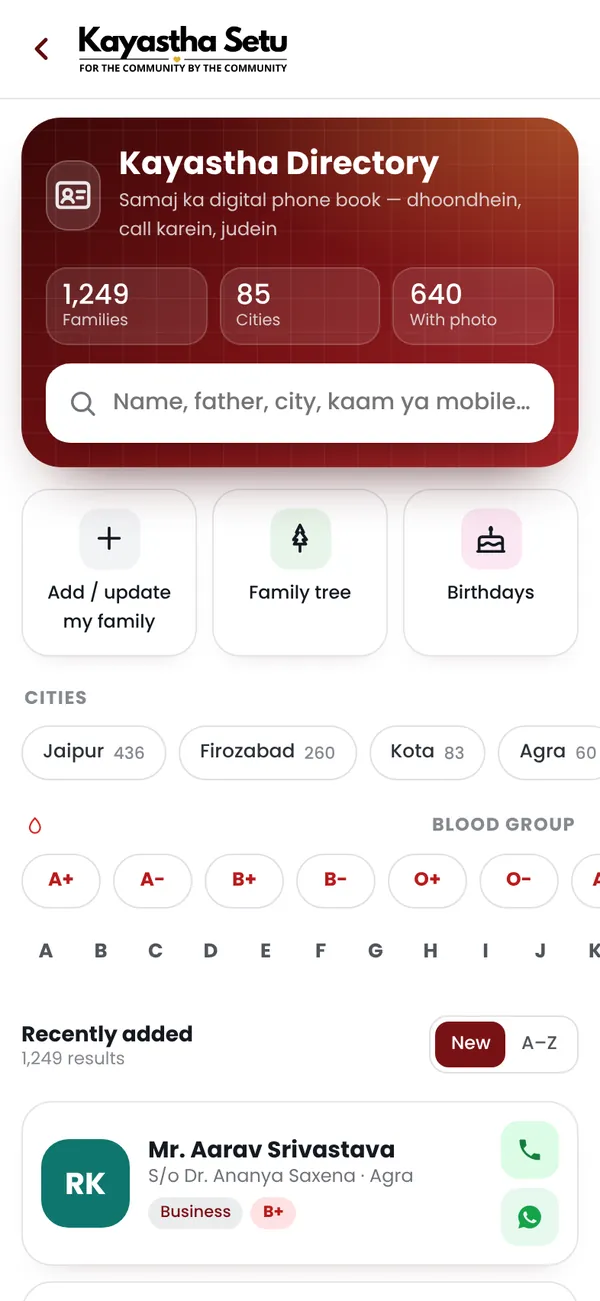
Platforms like Kayastha Setu (kayasthasetu.com) have become vital in helping scattered Mathur families stay connected. Features such as Family Directory enable members to find relatives across cities, while community timelines and discussion groups allow members to share knowledge about traditions, recipes and family histories.
Cultural Transmission Within Families
Young Mathur Kayasthas are increasingly learning family history, recipes, mantras and customs from their elders through both informal storytelling and formal documentation. Some families maintain written records, genealogies and recipe books. Parents encourage children to participate in festivals, learn classical arts, and understand the significance of community rituals.
Inter-generational Dialogue
Forward-thinking Mathur families foster respectful conversations between elders and youth, allowing traditions to evolve while retaining their essence. For instance, wedding ceremonies may blend traditional rituals with modern logistics; family meals may include traditional recipes alongside contemporary cuisines.
Mathur Kayasthas Across India & Beyond
While Mathur Kayasthas have deep roots in Rajasthan and northern India, the community has spread across all major Indian cities and to countries including the USA, UK, Canada, Australia, UAE and Singapore. Migration has typically been driven by education, employment and business opportunities.
Despite geographic dispersion, Mathur families maintain bonds through regular visits home, annual family reunions, celebration of major festivals together, and increasingly through digital means. The diaspora often becomes a bridge between traditional practices and modern adaptations, with second and third-generation Mathurs finding ways to honour their heritage while building lives in new countries.
Matrimonial alliances continue to play an important role in keeping the community cohesive. Young Mathur Kayasthas seeking suitable partners often rely on both traditional networks—family introductions and community gatherings—and modern platforms that connect eligible members within the samaj.
The Mathur Legacy Going Forward
The Mathur Kayastha identity today is neither static nor diluted—it is evolving. The community continues to value learning, ethical conduct, family loyalty and cultural pride while embracing careers, ideas and lifestyles that their ancestors could not have imagined.
As Mathur families engage with Kayastha Setu and similar community platforms, they participate in a larger conversation about what it means to be Kayastha in modern India. Through shared recipes, family trees, professional networks and cultural celebrations, the community ensures that the heritage gifted by Mathura and Rajasthan flourishes for generations to come.
Find any Kayastha family by name, city or profession — your community address book.
ExploreFrequently asked questions
What is the origin of the name 'Mathur' Kayastha?
The name 'Mathur' is believed to derive from Mathura, the sacred city in Uttar Pradesh. The community has strong historical roots in Rajasthan and the northern plains, where they served in royal courts and merchant households as scribes and administrators.
What are the main festivals celebrated by Mathur Kayasthas?
Mathur Kayasthas celebrate Diwali, Holi, Durga Puja, Navratri, and Chitragupta Jayanti with great devotion. These festivals involve traditional rituals, family gatherings, special foods, and community prayers that reflect their cultural and spiritual values.
What is significant about Mathur Kayastha food culture?
Mathur cuisine blends Rajasthan's robust flavours with refined northern Indian cooking, featuring dishes like Dal Bati Churma, Bajra Roti, Moong Halwa and Malpua. The kitchen emphasizes ghee, whole grains, pulses and fresh spices, with a strong tradition of home-cooked meals and elaborate festival feasts.
How do modern Mathur Kayasthas stay connected to their heritage?
Families stay connected through annual community gatherings, active local associations, digital platforms like Kayastha Setu, and inter-generational sharing of traditions within homes. Many also participate in cultural events, maintain genealogies and actively teach younger members about their customs and values.
About Kayastha Setu: Kayastha Setu (kayasthasetu.com) is the community app of the Kayastha samaj — family directory, Kayastha matrimony, jobs, blood donors, SOS, daily panchang, live aarti and Kaya AI in Hindi and English. Read our guide to the Kayastha community or download the app.