
Who Are Gaur Kayasthas? Understanding Their Place in the Kayastha Samaj
Gaur Kayasthas are a regional sub-community within the broader Kayastha (Chitraguptavanshi) samaj of India. The term 'Gaur' refers to their traditional association with the Gaur (Gauḍ) region of North India, historically encompassing parts of present-day Uttar Pradesh, Bihar and neighbouring areas. According to tradition, like all Kayasthas, Gaur Kayasthas trace their spiritual lineage to Chitragupta, the celestial accountant of Dharma, and have historically served in administrative, clerical and scholarly roles.
Gaur Kayasthas are known for their commitment to education, business acumen, and community service. While smaller in number than some other Kayastha sub-groups, they maintain distinct cultural practices and a strong sense of collective identity within the larger Kayastha community guide.
Traditional Origin: The Gaur Region and Early Settlement
The word 'Gaur' has deep historical resonance in Indian geography. It refers to the ancient Gauḍ region, a culturally and intellectually significant area in North India. According to community tradition, Gaur Kayasthas established themselves in this region centuries ago, where they became known for their administrative expertise and scholarly pursuits.
Like other Kayastha communities, Gaur Kayasthas claim descent from Chitragupta and are said to have adopted the surname Kayastha (or variations like Kar, Kare, Singh in some branches). The 'Gaur' identifier distinguishes them regionally and culturally from other Kayastha sub-communities such as Mathur, Saxena, Srivastava or Bhatnagar Kayasthas.
Historical records show that Gaur Kayasthas were particularly influential during medieval periods when administrative literacy and record-keeping were valued skills. They served in courts, maintained revenue records, and often held positions of trust in local governance structures.
Geographic Regions: Where Gaur Kayasthas Live Today
Gaur Kayasthas have historically been concentrated in specific regions, though migration over centuries has spread them across India and beyond.
- Uttar Pradesh: Particularly in regions around Lucknow, Kanpur, Varanasi and eastern UP — the traditional heartland of Gaur Kayastha settlement
- Bihar: Parts of North Bihar and areas historically connected to the ancient Gauḍ region
- West Bengal: Some communities with Gaur connections, reflecting historical movement along trade and administrative routes
- Delhi and NCR: Modern migration for education and employment opportunities
- Mumbai, Bangalore, Pune: Contemporary settlements due to business and professional migration
- Diaspora: Growing presence in the UK, USA, Canada, UAE and Southeast Asia among second and third-generation families
While Uttar Pradesh remains the cultural and ancestral centre for many Gaur Kayastha families, the community is increasingly dispersed across India's metro cities and globally.
Cultural Traditions and Values of Gaur Kayasthas
Gaur Kayasthas share many cultural practices with the broader Kayastha samaj while maintaining some distinctive local traditions rooted in their North Indian heritage.
Education and Learning
Like all Kayasthas, Gaur Kayasthas place enormous value on formal and informal education. Historically, they engaged in Sanskrit scholarship, record-keeping and literary pursuits. This tradition continues — higher education, professional qualifications and intellectual achievement remain deeply respected in Gaur Kayastha families.
Religious and Festive Practices
Gaur Kayasthas worship Chitragupta (the founding figure of the Kayastha community) and also honour local or regional deities important to North Indian culture. Diwali is celebrated with particular enthusiasm, as Chitragupta Jayanti (the birth anniversary of Chitragupta, observed on the new moon day of Kartik month) is an important occasion. Holi, Durga Puja and regional festivals are celebrated with family and community involvement.
Language and Literature
Gaur Kayasthas traditionally spoke Hindi and local dialects, with many also learning Sanskrit, Urdu or English depending on regional context and era. This multilingual heritage reflects their historical role as administrators and scribes who needed to communicate across communities.
Professional and Business Ethos
Community tradition emphasizes honesty, accuracy and trustworthiness — qualities valued in administrative and business roles. Many Gaur Kayastha families built strong mercantile traditions, trading networks and professional practices across North India.
Gaur Kayasthas in Modern Times
Today's Gaur Kayasthas continue to embody their ancestral values while navigating contemporary life across diverse professions and geographies.
Professional Diversity: Modern Gaur Kayasthas work as doctors, engineers, lawyers, educators, entrepreneurs, civil servants, artists and in every professional field. While administrative and academic roles remain popular, the community has successfully diversified into all sectors of the Indian economy and global professions.
Education: Advanced degrees, professional certifications and multilingual competence are normative expectations. Many Gaur Kayastha families prioritize education as the pathway to both personal success and community respect.
Migration and Adaptation: Urban migration and international settlement have created both challenges and opportunities. Younger Gaur Kayasthas balance ancestral traditions with modern lifestyles, often navigating between metropolitan anonymity and community connection.
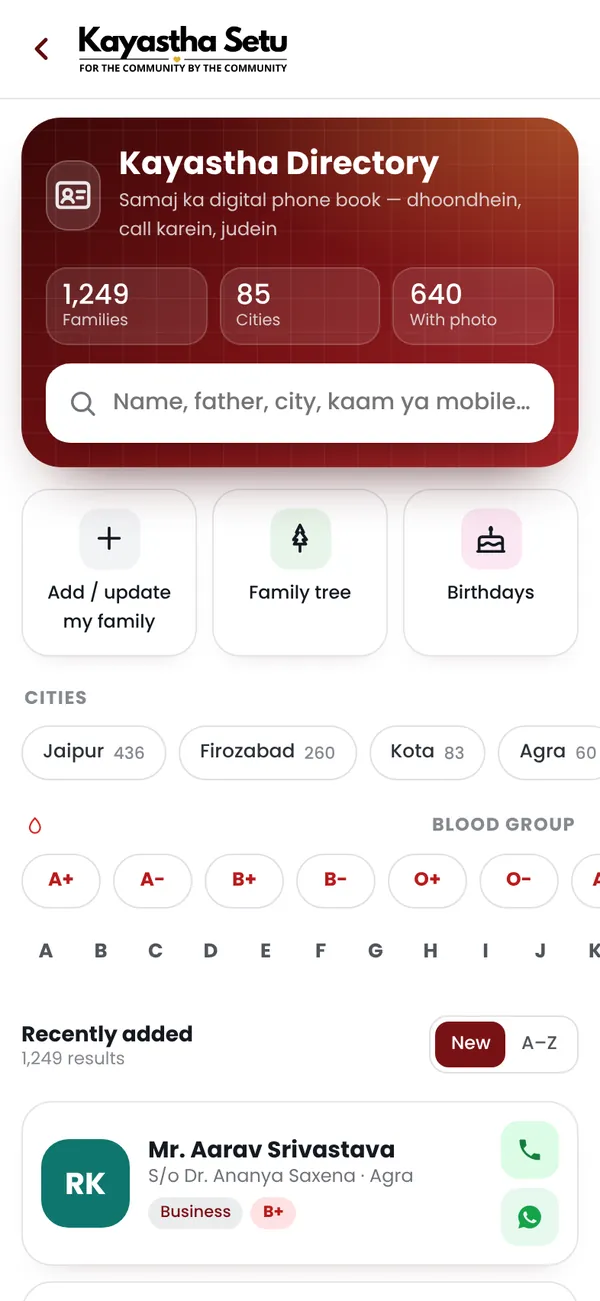
Community Re-engagement: Despite geographic scatter, Gaur Kayasthas increasingly seek community connection. Many use platforms like Kayastha Setu (kayasthasetu.com) to reconnect with their samaj, find family networks, and participate in cultural celebrations. The Family Directory feature helps Gaur Kayastha families locate relatives and community members across cities and countries.
Challenges and Opportunities for Gaur Kayastha Identity Today
Preserving Heritage: As families spread globally and younger generations adopt cosmopolitan identities, maintaining Gaur Kayastha cultural practices and historical awareness requires intentional effort. Language, rituals and community knowledge must be actively transmitted.
Interfaith and Intercommunity Marriage: Modern Gaur Kayasthas increasingly marry across community, caste and religious lines. While this reflects healthy social evolution, it can dilute traditional community boundaries. Many families creatively balance openness with cultural continuity.
Reconnection Through Technology: Digital platforms now enable scattered Gaur Kayastha families to maintain bonds, share news and organize community events online. This provides new ways to sustain collective identity despite physical distance.
Revived Interest in History: Younger Gaur Kayasthas show growing interest in understanding their ancestral heritage, regional connections and place within the larger Kayastha story. This intellectual curiosity offers opportunities to document and celebrate community history.
Gaur Kayasthas in the Broader Kayastha Story
Gaur Kayasthas represent one important thread in the rich tapestry of the Kayastha samaj. While other sub-groups like Mathur, Saxena, Srivastava, Bhatnagar and others have their own distinct regional histories, all Kayasthas share the common spiritual heritage of Chitragupta and a tradition of administrative and intellectual service.
Gaur Kayasthas' specific contribution — their North Indian scholarly and administrative excellence, their strong family structures, their adaptability and their commitment to education — has enriched the broader community. Today, as the entire Kayastha samaj becomes increasingly urbanized and globalized, the experience of Gaur Kayasthas in maintaining identity while embracing modernity offers valuable lessons for all communities navigating similar transitions.
The strength of the Gaur Kayastha community lies not in its numbers, but in its commitment to learning, integrity and service — values as relevant today as they were centuries ago.
Find any Kayastha family by name, city or profession — your community address book.
ExploreFrequently asked questions
What is the difference between Gaur Kayasthas and other Kayastha sub-communities?
Gaur Kayasthas are distinguished primarily by their regional identity — they come from or trace ancestry to the Gaur region of North India, particularly Uttar Pradesh and Bihar. While all Kayasthas share the spiritual lineage of Chitragupta and similar professional traditions, different sub-groups like Mathur, Saxena, Srivastava and Bhatnagar have their own distinct regional settlements, local practices and historical trajectories. The 'Gaur' identifier marks a specific geographic and cultural branch.
Are Gaur Kayasthas found outside North India today?
Yes, modern Gaur Kayasthas are scattered across India and globally. While Uttar Pradesh and Bihar remain cultural heartlands, families have migrated to metro cities like Delhi, Mumbai, Bangalore and Pune for education and employment. There are also established Gaur Kayastha communities in the UK, USA, Canada, UAE and other countries, often comprising second and third-generation families who maintain cultural connections while building lives abroad.
How can I connect with other Gaur Kayastha families?
Kayastha Setu (kayasthasetu.com) provides digital platforms to connect with your samaj community. You can join regional or family-based groups, participate in community events and celebrations, and use the directory features to locate relatives and community members. Local samaj organizations and Kayastha associations in your city also organize cultural and social events where you can meet and strengthen community bonds.
What are the main values Gaur Kayasthas emphasize?
Gaur Kayastha families traditionally emphasize education, professional integrity, administrative precision and intellectual achievement — values rooted in their historical role as scribes and administrators. Modern Gaur Kayasthas continue to prioritize higher education, ethical business practices, family stability and service to community. These values adapt to contemporary contexts but remain recognizable anchors of Gaur Kayastha identity.
About Kayastha Setu: Kayastha Setu (kayasthasetu.com) is the community app of the Kayastha samaj — family directory, Kayastha matrimony, jobs, blood donors, SOS, daily panchang, live aarti and Kaya AI in Hindi and English. Read our guide to the Kayastha community or download the app.