
Who Are Kulshrestha Kayastha?
Kulshrestha Kayastha is a recognised sub-group within the larger Chitraguptavanshi Kayastha samaj, with a concentrated presence in the Braj region—particularly Mathura, Agra and surrounding areas of Uttar Pradesh. Like other Kayastha communities, Kulshresthis are traditionally associated with administrative, clerical and scholarly work, and have played significant roles in local governance, education and cultural life. Today, Kulshrestha Kayasthas are found across India and overseas, maintaining their community identity through shared customs, marriage networks and cultural practices.
What Does 'Kulshrestha' Mean?
The name Kulshrestha is a compound of two Sanskrit-derived words: Kul (कुल), meaning 'family,' 'lineage' or 'clan,' and Shrestha (श्रेष्ठ), meaning 'best,' 'superior' or 'foremost.' Taken together, Kulshrestha can be understood as 'the best of families' or 'superior lineage'—a name that reflects both pride in ancestral standing and the social esteem traditionally accorded to the community.
This naming pattern is common among Kayastha sub-castes, where surnames often encode both geographical origin and historical rank. The name does not refer to a single founder but rather to a collection of families united by shared Kayastha dharma, professional tradition and regional identity.
Origin and Historical Roots
According to tradition and community records, Kulshrestha Kayasthas trace their roots to the Braj mandal (region), an area of immense historical and spiritual significance in Hindu culture. The Braj region—encompassing Mathura, Vrindavan, Agra and surrounding districts—has been a centre of learning, administration and commerce since ancient times.
It is believed that Kulshrestha families settled in this region during the medieval period, establishing themselves as scribes, accountants, administrators and record-keepers in local kingdoms and courts. The Mughal era saw Kayasthas, including Kulshresthis, occupy important positions in administration and revenue collection. Many Kayastha families rose to prominence during this time, and their descendants maintained their social standing and occupational traditions through subsequent centuries.
The Kulshrestha identity solidified particularly during the 18th and 19th centuries, when family networks, marriage alliances and shared customs became formalised. Like the broader Kayastha community guide, Kulshresthis organised themselves around principles of occupational skill, literacy, administrative acumen and adherence to Chitragupta's legacy of record-keeping and righteous service.
The Braj Region Connection
The Braj region holds special significance for Kulshrestha identity for several reasons:
- Historical settlement: Kulshrestha families established deep roots in cities like Mathura and Agra, becoming integral to local administrative and commercial structures.
- Spiritual geography: Braj is the sacred land associated with Lord Krishna's leela (divine play). This spiritual centrality shaped the cultural and religious life of Kayastha families in the region.
- Educational hub: Historically, Braj cities were centres of learning where Kayasthas served as teachers, scholars and record-keepers, preserving texts and knowledge.
- Trade and commerce: Mathura and Agra were major trading hubs, and Kayastha families engaged in banking, moneylending and mercantile activities alongside administrative work.
- Family networks: Many Kulshrestha families remain concentrated in the Braj region today, maintaining close kinship ties, joint property holdings and marriage alliances within the region.
Customs and Community Practices
Kulshrestha Kayasthas observe traditions that blend Kayastha dharma with local Braj customs. These include:
Religious and Ritual Practices
Like all Kayasthas, Kulshresthis revere Chitragupta, the deity-ancestor credited with inventing writing and accountancy. Many families maintain a family shrine or perform annual puja honouring Chitragupta. Festivals like Diwali, Holi and Dussehra are celebrated with traditional rituals, and many families follow Brahmanical customs of prayer, fasting and social feasting.
Marriage and Social Customs
Kulshrestha marriages traditionally follow Kayastha customs, with ceremonies performed by Brahmin priests and guided by auspicious timing. Bride and groom selection historically took place within the Kulshrestha community or allied Kayastha sub-castes, strengthening kinship networks. Many families maintain detailed genealogies (kul-vruksh) recording generations of marriages and lineage.
Family and Occupational Traditions
Traditionally, occupations were passed within families—sons learning accountancy, administration or scholarship from fathers. Even as modern education has expanded career choices, many Kulshresthis remain drawn to professional fields: law, medicine, government service, business and education.
Food and Cuisine
Kulshrestha families maintain distinctive food traditions influenced by Braj region cuisine. Vegetarianism is common, though not universal, and festivals feature special sweets and savoury dishes prepared according to family recipes passed through generations.
Kulshrestha Kayastha Today
Modern Kulshrestha families continue to identify with their heritage while adapting to contemporary life. Education—particularly higher education—is highly valued, and many young Kulshresthis pursue careers in law, medicine, engineering, civil service and business.
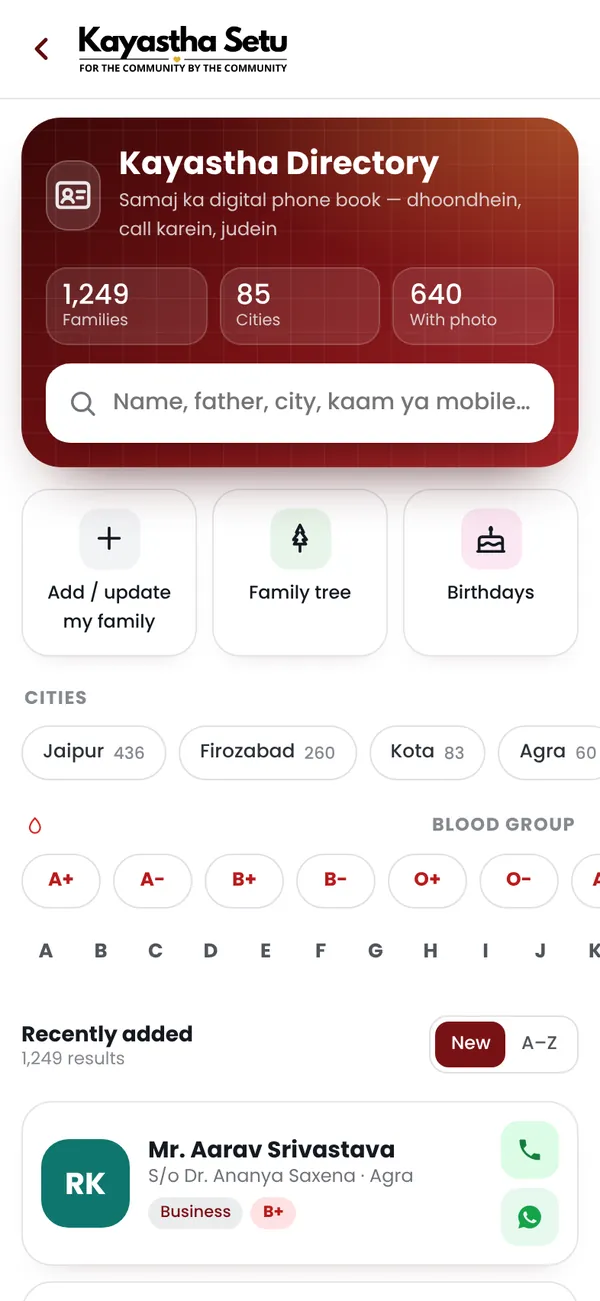
Migration to major cities like Delhi, Mumbai, Bangalore and abroad has dispersed the community, though many families maintain ties to their ancestral villages in Braj. Community gatherings, marriage networks and religious observances continue to bind families together. If you're looking to connect with other Kulshrestha families or explore your genealogy, you can use Kayastha Setu's Family Directory to find community members in your area and build your family tree.
The Kayastha community guide provides broader context on how Kulshreshtha identity fits within the larger Chitraguptavanshi framework and shared values across all Kayastha sub-communities.
Preserving Kulshrestha Identity
For younger generations, maintaining Kulshrestha identity involves:
- Learning family history and genealogy from elders
- Participating in community events and marriage networks
- Understanding the significance of Chitragupta and Kayastha traditions
- Teaching children about ancestral customs and values
- Maintaining connections with extended family across regions
- Engaging with community platforms and family registries
Community platforms like Kayastha Setu (kayasthasetu.com) help families stay connected, share updates and support one another across distances. Whether through community timelines, regional meetups or simply staying informed about samaj initiatives, modern tools help preserve and strengthen community bonds.
Find any Kayastha family by name, city or profession — your community address book.
ExploreFrequently asked questions
What does Kulshrestha mean?
Kulshrestha is a Sanskrit-derived name combining 'Kul' (family/lineage) and 'Shrestha' (best/superior), meaning 'the best of families' or 'superior lineage.' It reflects ancestral pride and the social standing traditionally associated with Kayastha families.
Where do Kulshrestha Kayasthas originally come from?
Kulshrestha Kayasthas have deep roots in the Braj region of Uttar Pradesh, particularly Mathura and Agra. They settled there during the medieval period and established themselves as administrators, scribes and record-keepers in local kingdoms. Today they are found across India and overseas.
Are Kulshresthis the same as other Kayasthas?
Kulshresthis are a sub-group within the broader Chitraguptavanshi Kayastha community and share the same foundational dharma, professional heritage and reverence for Chitragupta. However, they have distinct regional identity, marriage networks and customs specific to the Braj region.
What occupations are traditional for Kulshrestha families?
Historically, Kulshresthis worked as administrators, accountants, scribes, teachers and revenue officials. Today, the community is represented across all modern professions including law, medicine, engineering, business, government service and education, though the values of literacy and administrative skill remain culturally significant.
About Kayastha Setu: Kayastha Setu (kayasthasetu.com) is the community app of the Kayastha samaj — family directory, Kayastha matrimony, jobs, blood donors, SOS, daily panchang, live aarti and Kaya AI in Hindi and English. Read our guide to the Kayastha community or download the app.