
Diwali is the festival of lights and renewal, and in Kayastha homes across India, it unfolds over five days, each carrying its own meaning, ritual and flavour. While the core theme of victory over darkness and the welcome of Lakshmi (goddess of wealth and prosperity) is shared across Hindu families, Kayasthas add their own warmth and distinctive touches—especially in how they honour Chitragupta, the patron of their samaj. This guide walks you through the five days as they are traditionally celebrated in Kayastha households.
What Makes Kayastha Diwali Celebrations Special?
Kayastha Diwali traditions blend the universal joy of the festival with community and family bonds. The focus is on cleanliness and renewal of the home, preparation of family sweets, proper puja rituals, and a unique emphasis on Chitragupta Puja on Govardhan Puja day. Many Kayastha families also gather for samaj events during this season—a time to strengthen ties within the community while celebrating with neighbours and friends of all faiths.
Day One: Dhanteras (धनतेरस) – The Festival Begins
Dhanteras, celebrated two days before the new moon (Amavasya), marks the start of Diwali. The name comes from dhan (wealth) and teras (thirteen), as this day is traditionally linked to Lakshmi and prosperity.
What Kayastha Families Do:
- Deep cleaning and whitewashing – The home is scrubbed and brightened, often involving the whole family. This is not just physical cleanliness but a spiritual preparation.
- Buying utensils and jewellery – It is auspicious to purchase new vessels, especially for the kitchen, or to wear new jewellery.
- Evening lamps – Oil lamps are lit in the home, in the kitchen, and outside the main door to invite Lakshmi.
- Prayers to Kuber and Lakshmi – A simple puja honouring Kuber (god of wealth) and Lakshmi is performed by many families.
Many Kayastha homes also begin preparing the ingredients and mithais (sweets) on this day, as the festival season requires careful planning and time.
Day Two: Chhoti Diwali (छोटी दिवाली) – The Lesser Festival
Also called Choti Diwali or Naraka Chaturdashi, this day celebrates Krishna's victory over the demon Narakasur. It falls one day before Amavasya and is marked by early morning rituals and continued preparations.
Family Customs:
- Early-morning oil bath – Many family members wake before dawn, oil their bodies, and bathe. This symbolises purification and readiness for the main festival.
- Lighting of lamps – More diyas (small oil lamps) are lit around the home.
- Mithai-making in full swing – Families prepare barfi, laddoo, kheer, halwa and other traditional sweets. In many Kayastha homes, homemade sweets are gifted to relatives and neighbours, strengthening bonds.
Day Three: Laxmi Puja (लक्ष्मी पूजा) – The Heart of Diwali
This is the main Diwali day, celebrated on the new moon night (Amavasya). It is the most important day in Kayastha homes, when Lakshmi Puja takes centre stage.
The Puja Ritual:
In the early evening (between sunset and midnight), the family gathers in the puja room or a clean corner of the home. The ritual typically includes:
- Cleansing and decoration – The puja area is swept and decorated with flowers, rangoli (coloured powders), and marigolds.
- Lighting the Lakshmi lamp – A special diya or lamp is lit, often in a brass or clay holder.
- Offerings – Flowers, incense, coconut, sweets, fruits and sometimes coins are offered to Lakshmi's image or symbol.
- Mantras and prayers – Lakshmi Chalisa, Lakshmi Ashtakam, or simple family prayers are chanted. Some Kayastha families also recite Chitragupta Chalisa during or after the main puja.
- Distribution of prasad – Blessed sweets and fruits are shared among all present, often distributed to children first.
This is also the night for family gatherings. Relatives visit, sweets and gifts are exchanged, new clothes are worn, and homes are lit with electric lights and diyas. The atmosphere is one of joy, gratitude and unity.
Sweets in Kayastha Diwali:
No Diwali is complete without sweets. Traditional Kayastha homes prepare and gift:
- Barfi (milk-based fudge)
- Kheer (rice pudding with milk and raisins)
- Halwa (semolina or vegetable pudding)
- Laddoo (round balls of gram flour or milk solids)
- Jalebi (spiral-shaped syrup-soaked sweets)
- Regional specialties, depending on where the family is based
Making sweets at home is not just about taste—it is a labour of love and a way of showing care for family and community.
Day Four: Govardhan Puja & Chitragupta Puja (गोवर्धन पूजा & चित्रगुप्त पूजा)
The day after Lakshmi Puja, Govardhan Puja (also called Annakut) is celebrated. This day honours Krishna's lifting of the Govardhan mountain. For Kayasthas, this day also holds special significance as the day of Chitragupta Puja.
Who is Chitragupta?
According to tradition, Chitragupta is the celestial scribe and accountant appointed by Brahma (the creator). He records every deed of every living being. Kayastha community guide explains that Kayasthas trace their lineage to Chitragupta and consider him their spiritual patron. Many believe that Chitragupta himself took human form to establish the Kayastha samaj, making them guardians of knowledge, writing and administration.
How Chitragupta Puja is Performed:
- Puja setup – An image or symbol of Chitragupta is placed on a decorated altar, often alongside Lakshmi and other deities.
- Offerings – Flowers, incense, coconut, sweets and sometimes ink, pens or books are offered, symbolising knowledge and writing.
- Prayers – Families chant Chitragupta Chalisa or recite family prayers, seeking his blessings for wisdom, honesty and prosperity in work and business.
- Distribution of prasad – Just as with Lakshmi Puja, blessed food is shared among family members.
Some Kayastha families use this day to also offer new account books, pens or stationery in the puja, symbolising the beginning of a fresh year of honest work and accounting.
Govardhan Parikrama:
Many families also perform a symbolic parikrama (circumambulation) around a small mound of cow dung or a symbolic representation of Govardhan, while singing bhajans (devotional songs).
Day Five: Bhai Dooj (भाई दूज) – Sibling Love
The five-day festival closes with Bhai Dooj (also spelled Bhaiya Dooj), celebrated two days after the new moon. This day honours the bond between brothers and sisters.
The Ritual:
- Tilak ceremony – Sisters apply a tilak (a mark) on their brothers' foreheads, often mixed with sweets.
- Prayers for safety – Sisters pray for their brothers' long life, good health and success.
- Gifts and sweets – Brothers gift money, clothes or gifts to sisters, and sweets are shared.
- Feasts – Many Kayastha families gather for a special meal, bringing siblings and extended family together.
Even those without biological siblings often participate by visiting friends or relatives, maintaining the spirit of family bonds that runs through the Diwali season.
Tips for a Meaningful Kayastha Diwali at Home
- Start early – Begin cleaning and preparations a week or two before Dhanteras. This reduces last-minute rush and allows time for quality family moments.
- Involve children – Let young ones help with decorations, sweet-making and puja. This builds their connection to family traditions.
- Keep accounts clean – Many Kayastha families review and close their business or family accounts neatly before Govardhan Puja, in honour of Chitragupta. This is a good practice for financial health too.
- Share generously – Make extra sweets and gifts to share with neighbours, domestic help and those less fortunate. Diwali is about spreading joy.
- Connect with the samaj – Check if your local Kayastha community is organising a Samaj Diwali event. These gatherings strengthen the community bond.
- Respect diversity – Welcome friends and neighbours of all faiths into your celebrations. The light of Diwali is for all.
Bringing Tradition into Modern Times
In today's busy world, it is easy to let traditions slip. Many younger Kayasthas live far from their ancestral homes or are juggling multiple responsibilities. Yet Diwali offers a chance to pause, reconnect with family, and honour the values your ancestors held dear: honesty (through Chitragupta), prosperity (through Lakshmi), and unity.
Even if you cannot perform every ritual exactly as your grandparents did, the spirit matters most. A sincere prayer, a homemade sweet, a conversation with a sibling or elder, or simply lighting a lamp with intention—these keep the tradition alive and meaningful.
Many Kayastha families also use this season to reconnect with cousins, aunts and uncles across the country. If you are looking to reach out to members of your samaj during Diwali, Kayastha Setu (kayasthasetu.com) can help you find and connect with Kayastha families in your city or region through its nearby members feature, making it easy to celebrate together.
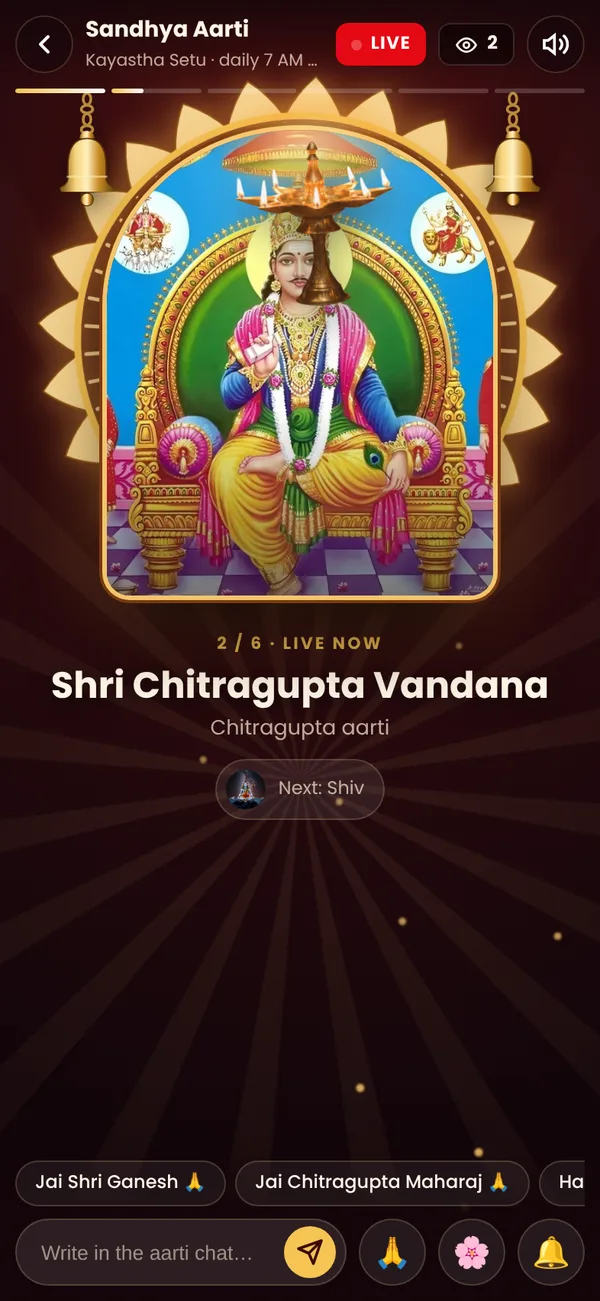
Aartis, bhajans and vandana with lyrics — swipe through your favourite deities.
ExploreFrequently asked questions
Why do Kayasthas celebrate Chitragupta Puja during Diwali?
According to tradition, Chitragupta is the celestial scribe and divine accountant, and Kayasthas trace their spiritual lineage to him. Many Kayastha families believe Chitragupta is their patron deity and founder. Celebrating his puja on Govardhan day honours this connection, seek his blessings for wisdom, honesty and success in professional and business life.
What sweets should every Kayastha home make for Diwali?
There is no single 'must-make' sweet—traditions vary by region and family. However, barfi, laddoo, kheer and halwa are common across most Kayastha homes. Many families also prepare regional or family-recipe sweets that have been passed down. The key is homemade love and sharing with family and community.
Can Kayasthas celebrate Diwali if they live far from family?
Absolutely. The essence of Diwali is lighting a lamp, remembering what matters, and connecting with family in spirit if not in person. You can light a diya at home, do a simple puja, call family members to share the moment, and prepare even one traditional sweet. Many Kayasthas also celebrate together through community events if they are away from home.
What is the significance of Bhai Dooj in Kayastha families?
Bhai Dooj celebrates the bond between brothers and sisters. It is a day to honour and pray for each other's well-being. In Kayastha homes, this often includes family gatherings, shared meals, and the exchange of gifts. Even in modern times, the ritual reminds us of sibling love and family unity.
About Kayastha Setu: Kayastha Setu (kayasthasetu.com) is the community app of the Kayastha samaj — family directory, Kayastha matrimony, jobs, blood donors, SOS, daily panchang, live aarti and Kaya AI in Hindi and English. Read our guide to the Kayastha community or download the app.