
Karva Chauth is one of India's most cherished festivals, observed on the fourth day after the full moon (Kartik Purnima) in the month of Kartik. On this day, married women fast from sunrise to moonrise, praying for the long life, health and prosperity of their husbands. The karva chauth vidhi is a beautiful blend of devotion, family togetherness and timeless tradition that has been passed down through generations in Kayastha and many other communities across North India.
What is Karva Chauth and Why Do Women Observe This Vrat?
Karva Chauth is fundamentally a vrat (fast) of love and commitment. The word 'karva' refers to an earthen pot, and according to tradition, this festival celebrates the bond between husband and wife. Women who observe this vrat do so with the belief that their fasting and prayers bring health, happiness and long life to their husbands. It is not just a ritual—it is an expression of devotion and a time for families to come together and celebrate marital bonds.
The festival has been observed for centuries across North India, particularly in regions like Punjab, Haryana, Uttar Pradesh and Madhya Pradesh. While the core meaning is universal, regional variations in the karva chauth vidhi exist, and families often blend tradition with their own customs.
Understanding Sargi: The Pre-Dawn Gift
Sargi is a special pre-dawn meal given by the mother-in-law (or female elder of the household) to the daughter-in-law before the vrat begins. This is one of the most beloved parts of the karva chauth ritual. The sargi is eaten before sunrise, so it is not considered 'breaking' the vrat—rather, it is the nourishment that sustains the woman through the entire day of fasting.
Traditional Sargi Items
A typical sargi includes:
- Pheni or seviyan — prepared with milk, dry fruits and sometimes jaggery
- Puri or bread — sometimes with a simple vegetable curry
- Fruits — especially grapes, apricots and sometimes watermelon
- Sweets — like gulab jamun, malpua or kheer
- Nuts and dry fruits — almonds, cashews, raisins for sustained energy
- Milk and milk products — curd, paneer or simply warm milk
- Henna — traditionally, mehandi (henna) is also applied before the vrat begins
The sargi is meant to be filling, nourishing and comforting. Many mothers-in-law wake up early to personally prepare it with love, making it a touching ritual that strengthens family bonds. Some families also add regional favourites—for example, in some areas, feni with dry fruits is preferred; in others, a simple but hearty meal of puri and aloo is the custom.
Step-by-Step Karva Chauth Puja Vidhi
The karva chauth puja is performed in the evening, after the moon has risen. Here is the traditional vidhi:
Before the Puja
Women dress in their finest traditional clothes—often a saree or salwar kameez in red or maroon. Mehandi is applied on hands, and bangles and jewellery are worn. This is both a spiritual preparation and a celebration of womanhood and marital status.
The Puja Steps
- Gather in a circle — Women typically sit together, often in the courtyard or a room, creating a circle or facing each other. Some families perform puja individually at home.
- Prepare the karva — The earthen pot (karva) is placed and may be filled with water, grains or seasonal fruits. It is decorated with flowers, leaves and sometimes painted with traditional designs.
- Invoke blessings — Prayers are offered to Gauri (Parvati), Shiva and other deities. The stories of Karva Chauth—especially the legend of Veervati—are recited. According to tradition, Veervati was a princess who first observed this vrat to save her husband's life.
- Rituals with the karva — The karva is circled around the lamp or passed to each woman in turn, symbolising the cycle of blessings and protection.
- Distribute prasad — After the prayers, fruits, sweets and water are distributed as prasad (blessed offering).
- Sight the moon — Women then look at the moon through a sieve or directly, recite prayers and break their fast (parana) only after sighting the moon.
- Husband offers water and food — Traditionally, the husband gives his wife her first sip of water and food after the fast, symbolising his care and the completion of the ritual.
Moon Sighting and When to Break Your Fast
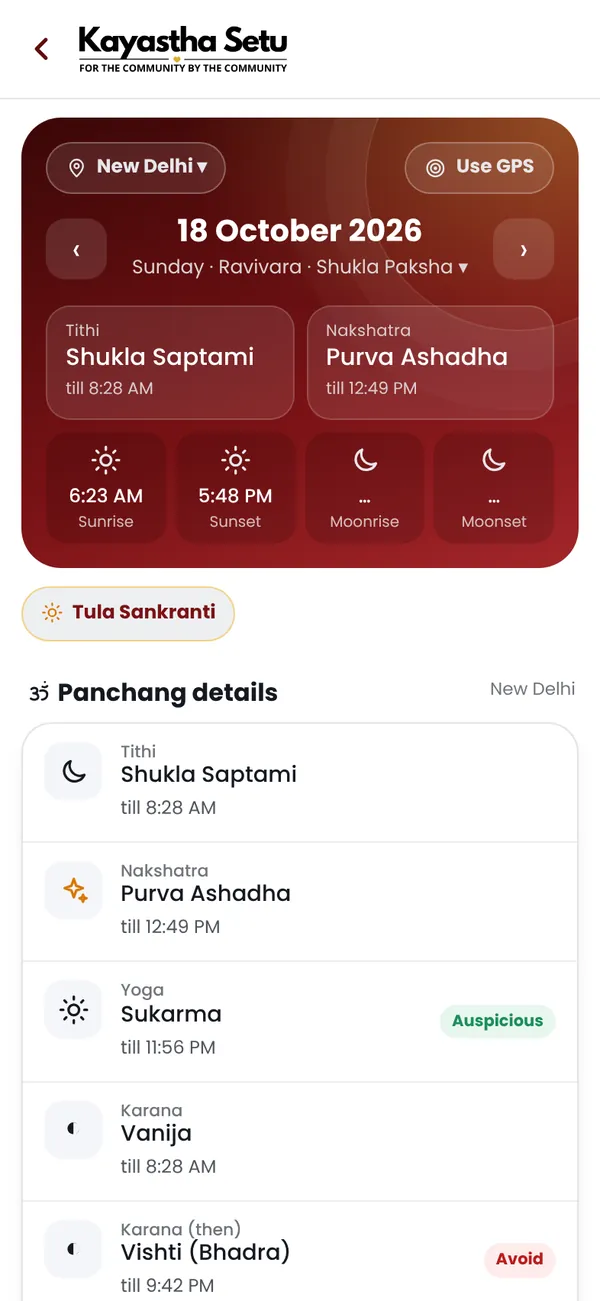
The moment of moon sighting is central to the karva chauth vidhi. Fasting women wait with anticipation and joy for the moon to appear. Many check the daily panchang on Kayastha Setu (kayasthasetu.com) in advance to know the exact moonrise time for their location, which helps with planning.
How to sight the moon correctly: Traditionally, women look at the moon through a sieve (chalni) while holding the sieve before the face, or simply look up at the sky. Some women look at the moon's reflection in water or in a mirror. The moment you see the moon clearly, you may break your fast.
It is important to know the accurate moonrise time for your city, as this varies by location and date. The panchang (traditional Hindu calendar) provides this information, and many temples and community apps also announce the exact timing.
Practical Health and Wellness Tips for Your Vrat
Fasting for an entire day requires planning and mindfulness. Here are some practical suggestions to help you observe the vrat comfortably:
- Eat a wholesome sargi — Do not skip or rush through the pre-dawn meal. Include protein, healthy fats, complex carbohydrates and plenty of fluids to sustain you.
- Stay hydrated before sunrise — Drink adequate water and milk during sargi time. This matters because you will not drink or eat again until moonrise.
- Rest during the day — Avoid strenuous physical activity. The vrat is a time for inner reflection, so adjust your day to include rest, prayer and time with family.
- Keep light activities for the evening — After moon sighting and breaking your fast, eat slowly and in small portions. Begin with fruits or milk, then move to heavier foods.
- Wear comfortable clothes — While traditional dress is lovely for puja, ensure you are physically comfortable throughout the day.
- Listen to your body — If you feel unwell or dizzy, do not hesitate to consult a healthcare provider. Some women are advised not to fast due to health conditions, and that is completely acceptable.
- Stay in positive company — Spend time with other women observing the vrat, share stories, sing bhajans and keep the atmosphere joyful. Many families gather for group pujas in the morning or evening.
Regional Variations in Karva Chauth Vidhi
While the core tradition is the same, different regions and communities observe karva chauth with their own flavour. In Kayastha households, the puja is often performed with deep reverence, blending family customs with wider North Indian traditions. Some families have specific prayers or stories they recite; others prepare unique sargi items based on regional cuisine.
What unites all these variations is the spirit of love, devotion and the celebration of marital bonds. Whether you are in Delhi, Lucknow, Agra or any other city, the essence of karva chauth remains the same: a woman's heartfelt wish for her husband's well-being and a beautiful ritual that brings families together.
Making Karva Chauth Meaningful in Today's World
In modern times, the meaning of karva chauth has evolved for many families. While the traditional vrat is still observed with devotion, many couples view it as a time to celebrate their relationship, not just as a one-sided ritual. Some husbands now choose to fast alongside their wives as a symbol of mutual care. Others keep the vrat light or adapt it to their circumstances.
The important thing is that karva chauth remains a festival of love, intention and family. Whether you observe the full vrat or a modified version, the act of pausing, praying and coming together with loved ones is what truly matters.
Tithi, nakshatra, yoga, muhurat and festivals — today’s panchang in one tap.
ExploreFrequently asked questions
What is the exact date of Karva Chauth this year?
Karva Chauth falls on the fourth lunar day (Chaturthi) after the full moon in the month of Kartik. The date changes every year on the Gregorian calendar. Check the daily panchang or your local temple for the exact date and moonrise time for your city.
Can a woman observe Karva Chauth if she is not married?
Traditionally, karva chauth is observed by married women. However, some unmarried women fast with the wish of finding a good life partner. There is no rigid rule, and families decide based on their own customs and beliefs.
Is it okay to break the fast before sighting the moon?
Traditionally, the fast is broken only after sighting the moon—this is considered the essence of the vidhi. However, if you face a genuine health emergency or medical issue, it is always best to prioritise your well-being and consult a family elder or healthcare provider.
What should I eat after breaking my fast?
Begin with light foods like fruits, milk or sweetened milk. Then gradually move to warm foods like khichdi, soup or a simple curry with bread. Avoid very heavy, spicy or oily foods immediately after fasting, as your digestive system needs time to adjust.
About Kayastha Setu: Kayastha Setu (kayasthasetu.com) is the community app of the Kayastha samaj — family directory, Kayastha matrimony, jobs, blood donors, SOS, daily panchang, live aarti and Kaya AI in Hindi and English. Read our guide to the Kayastha community or download the app.