
What Is Ekadashi Vrat?
Ekadashi vrat is a fast observed on the 11th day (tithi) of the lunar month in the Hindu calendar. The word 'Ekadashi' comes from Sanskrit: 'ek' meaning one and 'dash' meaning ten—so the 11th day. According to Hindu tradition, fasting on Ekadashi is believed to cleanse the body, calm the mind, and bring spiritual merit (punya). Many Kayastha families observe Ekadashi with devotion, often dedicating the day to prayer and reading sacred texts.
The practice has roots in ancient scriptures, including the Bhagavad Gita and Puranas, which describe Ekadashi as a day especially favored by Lord Vishnu. Whether you fast completely or eat light sattvic food, the core idea is to reduce worldly distractions and turn inward.
Types of Ekadashi Vrat
There are two main Ekadashi days in every lunar month—one in the bright fortnight (Shukla Paksha) and one in the dark fortnight (Krishna Paksha). Over a full year, there are 24 Ekadashi dates, and many have special names and significance.
Common Types You Should Know
- Nirjala Ekadashi – A complete dry fast with no food or water. This is considered the most rigorous and is often observed by experienced fasters.
- Phalahaar Ekadashi – A fruit and milk-based diet. You may eat fruits, milk, yogurt, nuts and milk-based sweets (but no grains, salt or oil-cooked food).
- Partial Fasting (Anaanya) – Light eating of sattvic foods like potatoes, milk products, and fruits, with no grains, onion or garlic.
- Phalahar with Specific Grains – Some traditions allow certain grains like sabudana (sago) and water chestnut flour on Ekadashi.
Choose the type that suits your health and capacity. Beginners often start with phalahaar (fruit and milk) before moving to more intense fasts.
Ekadashi Vrat Rules: What to Eat and Avoid
Foods to Eat (Sattvic Foods)
When fasting on Ekadashi, focus on pure, light and easily digestible foods:
- Fresh fruits (banana, apple, papaya, pomegranate, mango)
- Milk, yogurt, paneer and milk-based sweets (rabri, kheer made with milk and sabudana)
- Nuts (almonds, cashews, peanuts)
- Honey
- Rock salt (sendha namak) instead of table salt
- Potatoes and sweet potatoes (boiled or fried in ghee, not oil)
- Sabudana and water chestnut flour (singhara atta) for light meals
- Ghee (clarified butter)
Foods to Strictly Avoid
- All grains (rice, wheat, barley, oats)
- Pulses and lentils (dal)
- Onion and garlic
- Meat, fish, egg
- Salt (except rock salt)
- Oil (except ghee)
- Tea and coffee with milk that contains 'prohibited' ingredients
- Any food cooked the day before
The idea is to eat only fresh, sattvic (pure) foods that do not excite the senses or disturb the mind. Many devotees prepare simple dishes like sabudana khichdi, potato curry in ghee, or fruit smoothies with milk.
What Is Parana and When Should You Break Your Fast?
Parana (also spelled paarana) is the act of formally breaking your fast after Ekadashi. It is not done immediately at dawn on Dwadashi (the 12th day), but only after a specific time, usually two hours after sunrise or as per the panchang (lunar calendar).
Parana Rules
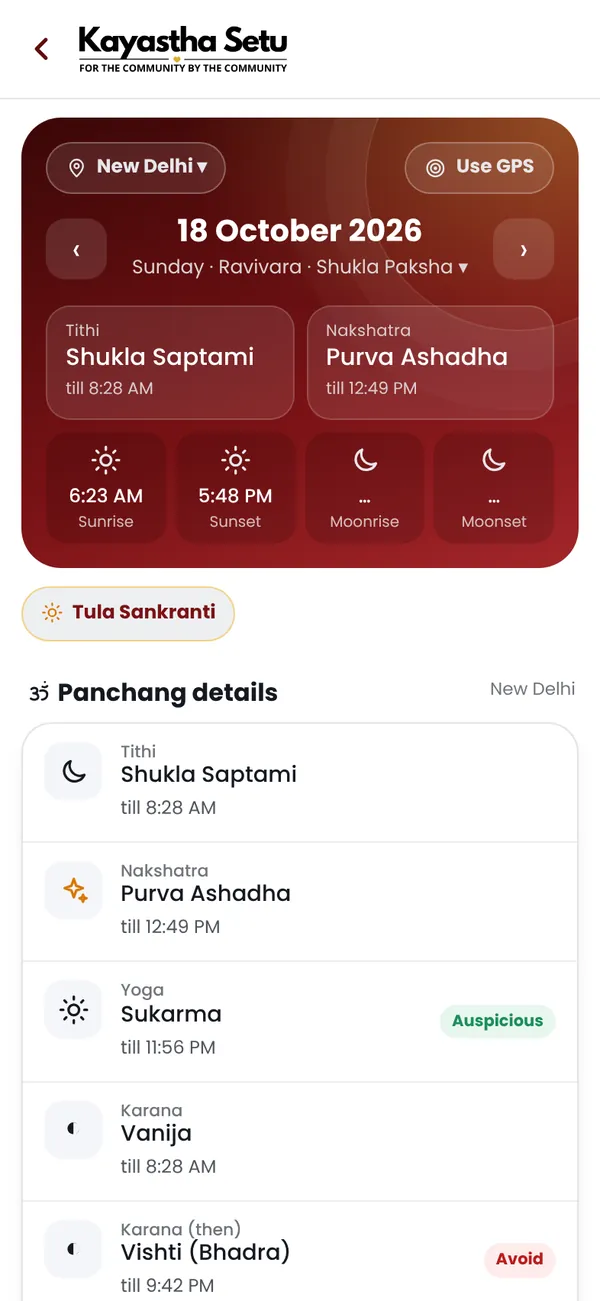
- Always check the exact parana time on the Daily Panchang feature on Kayastha Setu (kayasthasetu.com)—timings vary by location and lunar phase.
- Never break the fast during the Dwadashi tithi itself; wait until Dwadashi ends and the time is auspicious.
- Start parana with something light and sweet: a glass of milk, a banana, or a few dates.
- Eat a full meal only 15–30 minutes after the first light food.
- The first full meal after Ekadashi should be simple: khichdi, dal-rice, or light vegetable curry with roti.
Breaking the fast too early or too late can disrupt your digestion. The parana time is calculated based on the ending of the Dwadashi tithi at your location, so using an accurate panchang is essential.
How to Find the Ekadashi Date in Your Calendar
Ekadashi dates follow the lunar calendar, not the common Gregorian calendar, so the date changes every month.
Simple Ways to Know When Ekadashi Falls
- Use the Kayastha Setu Panchang – The Daily Panchang on Kayastha Setu (kayasthasetu.com) shows Ekadashi dates, parana times and all tithi details for your location.
- Ask Elders or Your Temple – Local temples and community members often share Ekadashi calendars during festivals.
- Download a Hindu Calendar App – Many apps show tithi and Ekadashi dates for the entire year.
- Mark Both Ekadashis – Every lunar month has two Ekadashis (Shukla and Krishna), so mark both in your personal calendar once you know the pattern.
Many families also observe Ekadashi on dates set by their regional or family tradition, so it's worth checking with your elders or samaj.
Ekadashi Vrat for Beginners: Step-by-Step
Before the Fast
The day before Ekadashi, eat normally but avoid overeating. Some choose to eat only sattvic food a day in advance. Go to bed early and wake up before sunrise on Ekadashi day. Bathe and wear clean clothes.
During the Fast
- Decide your fasting type (nirjala, phalahaar, or partial) based on health and experience.
- If eating, have light meals at mid-morning and mid-afternoon. Keep water available (unless doing nirjala).
- Spend time in prayer, reading the Bhagavad Gita, or meditating on Lord Vishnu.
- Avoid gossip, anger and negative thoughts. Keep the day spiritually focused.
- Chant mantras or bhajans, or listen to devotional music.
Breaking the Fast (Parana)
- Check the exact parana time the evening before using the panchang.
- Wait until the Dwadashi tithi officially begins (usually 2 hours after sunrise).
- Eat something sweet first—milk, banana, or dates.
- Follow with a simple, easy-to-digest meal 15–30 minutes later.
Common Mistakes to Avoid
- Breaking the fast too early – This violates the vrat rules and is believed to reduce its spiritual benefit.
- Overeating at parana – After fasting, your digestive system is sensitive. Eat small portions and chew slowly.
- Eating prohibited foods by mistake – Always double-check ingredients. Many snacks contain salt, onion or oil that break the vrat.
- Fasting when ill – If you have diabetes, low blood pressure or are pregnant, consult a doctor before fasting. It is not sinful to skip a fast if it harms your health.
- Ignoring local parana timing – Using a generic time can break your vrat accidentally. Use location-specific panchang data.
Remember: Ekadashi is a spiritual practice, not a test of endurance. If your health requires you to eat, do so with respect and intention.
Tithi, nakshatra, yoga, muhurat and festivals — today’s panchang in one tap.
ExploreFrequently asked questions
Can I drink water during Nirjala Ekadashi?
No. Nirjala (without water) means a complete dry fast—no food or water, not even a drop. This is the most rigorous form and is usually done by experienced fasters. Beginners are advised to try phalahaar (fruit and milk) or partial fasting first.
What if I accidentally eat a prohibited food during Ekadashi?
If the mistake was unintentional and you did not know, the vrat is considered valid. However, if you knowingly ate grain or meat, many traditions say you should repeat the fast on the next Ekadashi or donate to charity as atonement. The most important thing is your sincere intention.
Is it okay to skip Ekadashi if I am sick or have a medical condition?
Yes, absolutely. Hindu dharma teaches that your health and life come first. If fasting will harm you—due to diabetes, pregnancy, weakness, medication or other conditions—it is not only allowed but advised to eat normally. You can observe Ekadashi spiritually without physical fasting, or repeat the fast when you are well.
How do I find the exact parana time for my city?
The parana time depends on your location and the lunar calendar. Use the Daily Panchang feature on Kayastha Setu (kayasthasetu.com), which provides location-specific parana timings. You can also ask your local temple or check a printed Hindu panchang for your region.
About Kayastha Setu: Kayastha Setu (kayasthasetu.com) is the community app of the Kayastha samaj — family directory, Kayastha matrimony, jobs, blood donors, SOS, daily panchang, live aarti and Kaya AI in Hindi and English. Read our guide to the Kayastha community or download the app.