

The Karna Kayastha community of the Mithila region—historically the northern part of Bihar and parts of Nepal—represents one of the most distinctive branches of the Kayastha samaj. Known for their meticulous record-keeping traditions and their central role in Mithila's administrative and cultural life, the Karna Kayasthas have maintained a proud heritage of learning, service and community guardianship for many centuries.
According to the Kayastha community guide, Kayasthas as a whole trace their origins to Chitragupta, the celestial accountant and scribe, and this legacy of recordkeeping is nowhere more visible than among the Karna Kayasthas of Mithila. Their panji system—a genealogical and administrative record—stands as a living archive of family lineages and social memory.
Who Are the Karna Kayasthas of Mithila?
Karna Kayasthas are primarily settled in the Mithila region, which spans parts of modern-day Darbhanga, Madhubani, Sitamarhi and surrounding districts of Bihar. The term 'Karna' is believed to relate to administrative or scribal work (from Sanskrit 'karan,' meaning function or office), though local traditions also associate it with regional identity.
Historically, Karna Kayasthas served in various capacities—as record-keepers, administrators, educators, and community guardians. They were trusted to maintain genealogies, land records, and family histories, roles that demanded both literacy and ethical integrity. This tradition continues to influence their social standing and community respect even today.
- Primary occupation: Record-keeping, administration, education and clerical work
- Geographic centre: Mithila region (Darbhanga, Madhubani, Sitamarhi districts)
- Key tradition: Panji system (genealogical registers)
- Historical role: Family historians and custodians of community memory
- Cultural contribution: Preservation of Mithila's literary and administrative heritage
The Panji System: A Living Record of Families
The panji (also written as panaji or panjika in some regions) is the most distinctive heritage of the Karna Kayasthas. This is a detailed genealogical register that records family lineages, marriages, births, property transactions and other significant life events. Rather than a single document, a panji is typically a continuous record maintained across generations, often kept in family archives or by community record-keepers.
The panji served multiple purposes: it established social status and lineage, settled disputes over inheritance and property, recorded matrimonial connections between families, and preserved the collective memory of the community. In a society where formal written property deeds or birth certificates were rare, the panji was often the only authoritative proof of identity, legitimacy and family standing.
How the Panji Was Maintained
Traditionally, one person in the family—usually the eldest or the most educated—would serve as the panji custodian. This role demanded literacy, an eye for detail, and trustworthiness. Entries were written in Hindi or local scripts, using ink and paper, and sometimes recorded on specially prepared cloth or parchment for durability. Important family events were marked with the date, witnesses' names, and sometimes explanatory notes.
The panji was consulted during marriages, inheritance settlements, adoption ceremonies, and community disputes. It was shown to prospective in-laws to establish family credentials, consulted by courts in property cases, and referred to by community leaders to settle genealogical questions.
Mithila: A Centre of Learning and Culture
Mithila holds deep significance in Hindu tradition and Indian history. According to tradition, it was the birthplace of Sita and the kingdom of King Janaka, known as a realm of wisdom and justice. This cultural and spiritual heritage shaped the character of communities living there, including the Karna Kayasthas.
The region is also famous for Mithila art (or Madhubani painting), a centuries-old tradition of intricate, colourful wall and paper paintings. While primarily associated with women artists, the broader Mithila culture—its learning, its aesthetic sensibility, its values—influenced all communities in the region, including the Kayasthas who often served as administrators and educators in this culturally rich landscape.
Education and Literacy: A Kayastha Hallmark
Karna Kayasthas historically placed great emphasis on education. Because their traditional role required reading, writing and numeracy, families invested in schooling their children from an early age. Many Karna Kayastha communities established pathshalas (traditional schools) and later supported modern schools and colleges.
This commitment to learning has meant that Karna Kayasthas produced teachers, scholars, journalists, administrators and professionals across many fields. Even today, education remains a core value in these families, with many encouraging higher studies and professional advancement.
Mithila Kayasthas in Modern Times
In the 20th and 21st centuries, Karna Kayasthas have adapted to modern life while maintaining cultural pride. Many have migrated to cities for professional opportunities—Delhi, Bangalore, Mumbai, Kolkata—yet continue to marry within the community and celebrate Kayastha festivals and traditions. Their professional presence spans law, medicine, journalism, academia, business and administration.
The old panji system, though less commonly maintained in its traditional form, remains a symbol of cultural continuity. Some families have digitised their panjis, while others keep handwritten records as family heirlooms. The spirit of the panji—the idea of knowing one's ancestry, maintaining family connections, and honouring lineage—remains alive in community practices and family values.
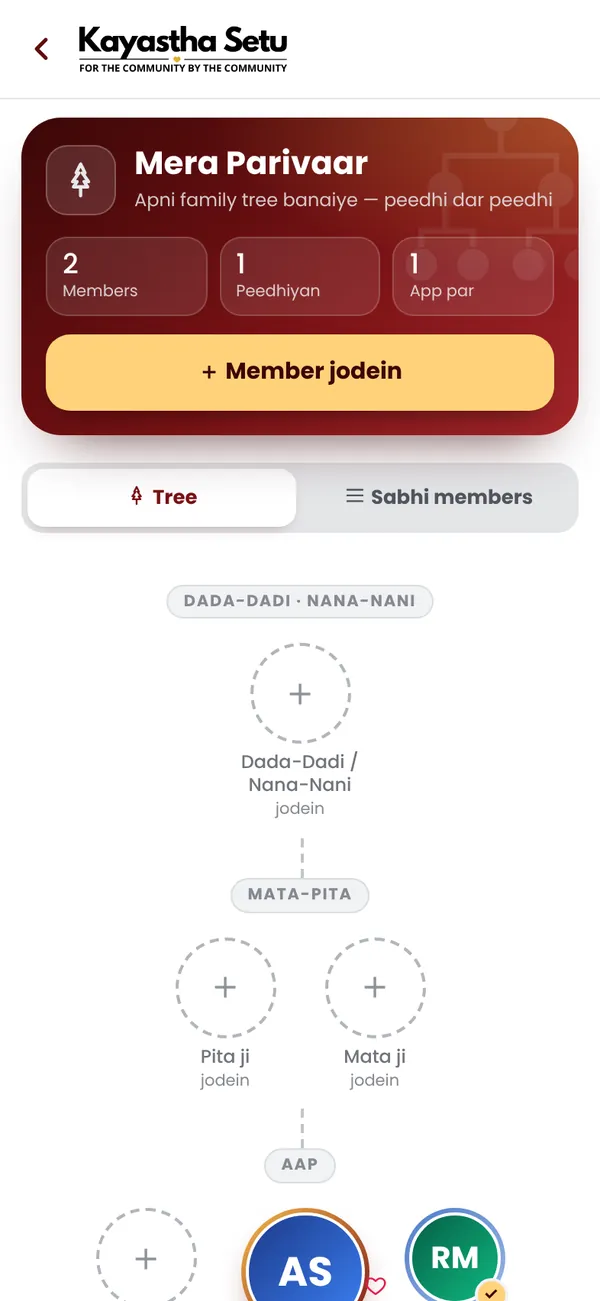
Community platforms like Kayastha Setu (kayasthasetu.com) now help Karna Kayasthas and other Kayastha families stay connected across distances. Features like the Family Tree tool allow families to document and share genealogical information digitally, echoing the age-old purpose of the panji in a modern format.
Key Traditions and Values
Several values remain central to Karna Kayastha identity:
- Integrity in record-keeping: The panji was trusted only if the keeper was known to be truthful and unbiased
- Family honour: Status and standing were reflected in genealogy; maintaining family reputation was paramount
- Learning and literacy: Education was seen as the path to respectability and service
- Service to community: The traditional role of record-keeper or administrator was a form of seva (service)
- Continuity and memory: Preserving family and community history across generations
Challenges and Preservation Efforts
Like many communities, Karna Kayasthas face challenges in preserving their heritage. Handwritten panjis are fragile and at risk of loss through neglect, natural disaster or simple passage of time. As families disperse geographically and younger generations adopt modern life, the tradition of maintaining detailed family records has weakened.
However, there is growing awareness of the value of this heritage. Some families, schools and cultural organisations in Mithila are working to document and preserve panji records. Digital initiatives and genealogy platforms are making it easier to record and share family histories without losing the information to time or circumstance. Community gatherings and samaj events also serve to reinforce connections and shared identity among scattered Karna Kayastha families.
The panji was not merely a record—it was a trust. It held within it the honour, the rights, and the very identity of a family.
Today, Karna Kayasthas take pride in their Mithila heritage and their role as custodians of a unique tradition. Whether through family stories, formal genealogical records, or participation in community events, they continue to honour the legacy of their ancestors and pass it to the next generation.
Build your vansh vriksh — parents, grandparents, children and in-laws, with photos.
ExploreFrequently asked questions
What is a panji and why was it important for Karna Kayasthas?
A panji is a detailed genealogical register that recorded family lineages, marriages, births and property transactions across generations. For Karna Kayasthas, the panji served as proof of identity, lineage and social status, and was consulted in matrimonial alliances, inheritance disputes and community matters. It was the living record of family memory and honour.
What is Mithila and why is it significant for Karna Kayasthas?
Mithila is a historical region in northern Bihar, believed according to tradition to be the birthplace of Sita and kingdom of the wise King Janaka. The Karna Kayastha community is primarily centred in this region, where they have served for centuries as administrators, educators and record-keepers. Mithila's cultural heritage of learning and art has influenced the values and identity of communities there, including Karna Kayasthas.
Are old panji records still maintained by Karna Kayastha families today?
While the traditional practice of handwritten panji-keeping has declined as families have modernised and dispersed, many families still preserve old records as heirlooms and historical documents. Some are now being digitised and shared using modern genealogy tools and community platforms. The spirit of the panji—honouring family lineage and history—remains valued in community traditions.
What professions do Karna Kayasthas typically pursue today?
Historically focused on administration, education and record-keeping, modern Karna Kayasthas work across diverse fields including law, medicine, journalism, academics, business, government service and technology. The community's traditional emphasis on education and literacy has carried forward, making professional achievement and higher studies important family values.
About Kayastha Setu: Kayastha Setu (kayasthasetu.com) is the community app of the Kayastha samaj — family directory, Kayastha matrimony, jobs, blood donors, SOS, daily panchang, live aarti and Kaya AI in Hindi and English. Read our guide to the Kayastha community or download the app.