
What is Kalam Dawat Puja?
Kalam Dawat Puja is a traditional Kayastha festival that celebrates and honours the pen (kalam) and ink (dawat)—the sacred tools of writing, knowledge and learning. According to tradition, this puja is performed to show gratitude for the gift of literacy and to invoke blessings for prosperity, wisdom and success in all written work and intellectual pursuits. It is believed that on this day, Kayastha families worship these instruments as symbols of Chitragupta's divine craft—the art of recording human deeds—and seek his blessings for clarity, accuracy and ethical conduct in all written matters.
Why Do Kayasthas Worship Pen and Ink?
The pen and ink hold deep spiritual and cultural significance in Kayastha life. Historically, Kayasthas have been scribes, administrators, scholars and record-keepers across North India, and these tools represent the very foundation of their community's identity and occupation.
- Connection to Chitragupta: According to the Kayastha community guide, Chitragupta—the celestial accountant and scribe—is believed to have invented the art of writing and record-keeping. The pen and ink are seen as extensions of his divine duty to maintain the ledger of karma.
- Symbol of Knowledge: The pen represents learning, education and intellectual power. Worshipping it acknowledges that knowledge is the highest form of wealth.
- Livelihood and Dharma: For generations, Kayasthas have depended on writing skills for their profession. The puja is also a thanksgiving for honest work and ethical livelihood.
- Divine Recording: Just as Chitragupta records the deeds of all beings, the pen symbolizes the sacred duty to write truth, maintain records with honesty and contribute to society through knowledge.
The Tradition of Not Writing on Kalam Dawat Day
One of the most distinctive practices associated with Kalam Dawat Puja is the custom observed in many Kayastha families of abstaining from writing, pen work or any use of the pen on this day. This practice carries both practical and spiritual meaning.
Why the pen is kept aside: By not using the pen on Kalam Dawat, families show respect and reverence to this sacred tool—much like keeping a deity at rest after worship. It is believed that on this auspicious day, the pen deserves to be honoured and rested, not put to ordinary work. Some families also believe that giving the pen a break allows for spiritual renewal and ensures good fortune for all future written work.
This tradition is particularly important in households where family members work as writers, accountants, lawyers, journalists, students or in any profession involving pen and paper. School-going children in traditional families may be excused from writing assignments, or parents may gently postpone important written work to another day as an act of faith and respect.
Modern practice: In contemporary times, this custom is observed with flexibility. Some families strictly avoid handwriting, while others interpret the tradition more loosely and simply ensure that the day is marked with a special puja and mindful gratitude, without treating writing as prohibitive. The spirit of the tradition—honouring the tools and seeking blessings—remains central, even as the practice adapts to modern life.
How Kayastha Families Celebrate Kalam Dawat Puja
The celebration of Kalam Dawat Puja varies across regions and family customs, but certain common elements mark the observance:
Traditional Ritual Elements
- Cleaning and Setup: The pen, ink, inkwell (dawat) and writing materials are cleaned and arranged on a small altar or puja space, often decorated with flowers.
- Prayers and Mantras: Families recite prayers honouring Chitragupta and seeking his blessings. Some recite: "Chitraguptaya Namah" (salutations to Chitragupta).
- Offerings: Sweets, flowers, incense and a lamp (diya) are offered. In some homes, a small offering of milk or water is made to the writing instruments.
- Seeking Blessings: Family members, especially children and those in writing-related professions, touch the pen and ink with respect and seek blessings for success and accuracy in their work.
- Prasad: After the puja, sweets or prasad are distributed among family members as divine grace.
Regional Variations
While Kalam Dawat is most prominently celebrated among North Indian Kayasthas—particularly in Delhi, Uttar Pradesh, Bihar and Madhya Pradesh—the way it is observed can differ:
- Some families combine it with Basant Panchami or other spring festivals, as writing and learning are considered auspicious during this season.
- In certain communities, the puja is conducted at home; in others, it may be part of a larger community gathering organized by local Kayastha samaj committees.
- The timing may vary—some celebrate on a specific date according to the lunar calendar, while others observe it on a date that aligns with family or community tradition.
Celebrating Kalam Dawat in Modern Times
Today's Kayastha families blend traditional reverence with contemporary life in creative ways:
- Puja at Home: A brief morning puja, often lasting 10–15 minutes, honouring pens, diaries, computers and writing tools.
- Including Digital Tools: Some modern families extend the blessing to keyboards, styluses and digital devices—recognizing that writing and knowledge creation now happen across multiple media.
- Family Involvement: Children are taught the significance of the festival and encouraged to reflect on the importance of learning and honest work.
- Community Observance: Some Kayastha samaj organizations host community pujas, talks on the legacy of Chitragupta, or educational events celebrating Kayastha contributions to scholarship and administration.
- Gratitude Journaling: A few families use the day to write or reflect on their gratitude for opportunities to learn and contribute through their work.
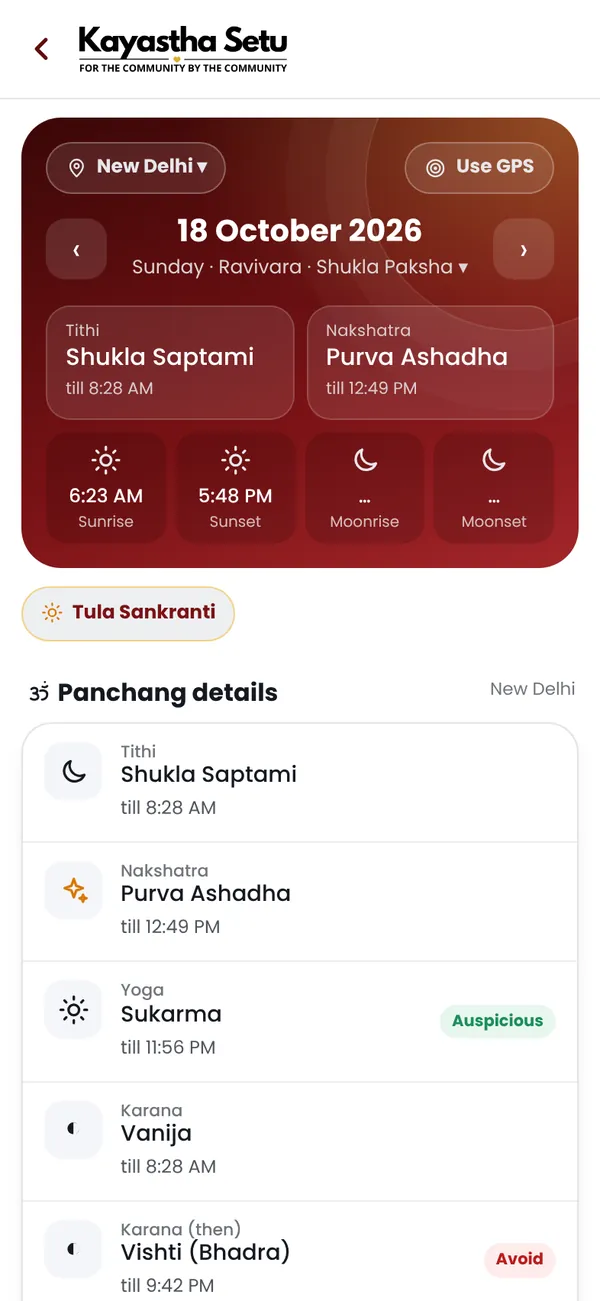
For those who want to stay connected with Kayastha festival dates and traditions, the Daily Panchang feature on Kayastha Setu (kayasthasetu.com) provides auspicious dates and lunar calendar information to help plan your family's observances.
The Deeper Message of Kalam Dawat
Beyond the ritual, Kalam Dawat Puja carries a timeless message: that knowledge, honesty and the written word are sacred responsibilities. In honouring the pen and ink, Kayasthas affirm their commitment to truth, literacy and intellectual integrity.
Whether your family follows the traditional practice of not writing on this day or celebrates with a simple puja, the festival reminds us that the tools we use to learn, earn and serve deserve respect—and that every act of honest, truthful writing is an offering to the legacy of Chitragupta and the values of our samaj.
Tithi, nakshatra, yoga, muhurat and festivals — today’s panchang in one tap.
ExploreFrequently asked questions
On which date is Kalam Dawat Puja celebrated?
Kalam Dawat Puja is traditionally observed on dates determined by the lunar calendar and can vary each year. Many families celebrate it during the spring season, sometimes aligning with Basant Panchami or other auspicious dates. The exact date differs by region and family custom, so checking your family's tradition or consulting the lunar panchang (calendar) is recommended.
Is it really necessary to avoid writing on Kalam Dawat day?
The practice of not writing on Kalam Dawat is a traditional custom followed by many Kayastha families as a sign of respect and reverence to the pen. However, in modern times, this is observed with flexibility based on individual belief and life circumstances. The core spirit is to honour the pen and seek blessings; how strictly you follow the practice is a personal family choice.
Can we celebrate Kalam Dawat Puja without a formal altar or ritual?
Yes, absolutely. The essence of Kalam Dawat Puja is gratitude and respect for knowledge and writing. A simple puja—holding your pen with reverence, offering flowers or incense, and reciting a prayer—is meaningful. Many modern families celebrate in whatever way feels authentic to them while honouring the tradition's core message.
Do all Kayastha sub-communities celebrate Kalam Dawat?
Kalam Dawat Puja is most widely celebrated among North Indian Kayasthas. While the tradition is rooted in Kayastha identity and the legacy of Chitragupta, observance can vary by region, family and sub-community. Some families celebrate prominently; others may observe it in a more personal or informal way. Your own family's practice and belief are what matter most.
About Kayastha Setu: Kayastha Setu (kayasthasetu.com) is the community app of the Kayastha samaj — family directory, Kayastha matrimony, jobs, blood donors, SOS, daily panchang, live aarti and Kaya AI in Hindi and English. Read our guide to the Kayastha community or download the app.