
How Kayastha Families Celebrate Holi: A Festival of Colour and Sweetness
Holi, the festival of colours and spring, holds a special place in Kayastha family calendars. For many Kayastha households, Holi traditions centre on three pillars: preparing and sharing gujiya (the iconic sweet), gathering in mehfil (social circles) to play with colours and sing, and creating memories that bind generations together. Whether your family is in Delhi, Lucknow, Kolkata, Mumbai or anywhere across India, the essence remains similar—celebration grounded in home, food and community.
The festival typically begins weeks before Holi itself, with preparations for gujiya, the crescent-shaped sweet that represents the season and the spirit of giving.
The Art of Making Gujiya: Recipe and Ritual
Gujiya is not merely a sweet; it is a labour of love. In most Kayastha homes, the making of gujiya is a family affair that starts early in the month of Phalgun (February–March). The process involves:
- Preparing the dough: Maida (refined flour) mixed with ghee, milk and sometimes semolina, kneaded soft and allowed to rest.
- Creating the filling: Khoya (dried milk solids), grated dry fruits like almonds and pistachios, coconut, cardamom powder, and sometimes fennel seeds—each family has its own masala blend.
- Shaping and sealing: The dough is rolled, filled with the khoya mixture, folded into a half-moon shape and sealed at the edges.
- Cooking: Fried in ghee until golden, then sometimes dipped in sugar syrup or rabri (thickened milk).
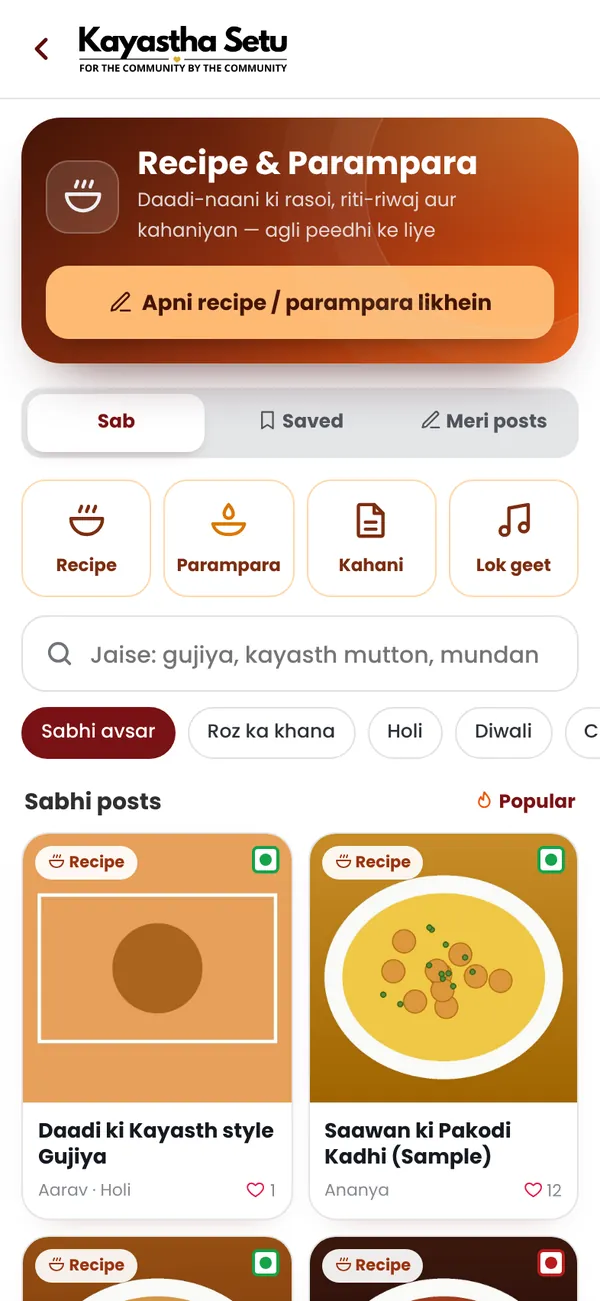
Many Kayastha families keep family recipe notes passed down from dadi (grandmother) or nani (grandmother), and these become treasured guides. Some households make gujiya not just for home consumption but also to distribute among neighbours, office colleagues and distant relatives—a custom that strengthens social bonds. For those looking to document or share such family recipes, the Recipes & Parampara feature on Kayastha Setu offers a space to preserve and share these culinary traditions with the community.
The Mehfil: Songs, Stories and Sisterhood
Holi is incomplete without the mehfil—the gathering. In Kayastha culture, mehfil often refers to informal social gatherings, particularly among women, where songs are sung, stories are shared and the festival is celebrated together.
Traditional Holi songs in Kayastha households often include:
- "Holi aai re kanhaai" – A playful song invoking Lord Krishna.
- "Rang barse bhige chunar aaj" – A beloved Bollywood Holi song now part of family tradition.
- "Phoolon ki holi hai" – A spring-themed favourite sung in many North Indian Kayastha homes.
- Devotional bhajans dedicated to Radha-Krishna or local deities depending on regional practice.
The mehfil typically includes:
- Singing and clapping together.
- Sharing gujiya, malpua, dahi-bhalle and other festive sweets.
- Playing with colours (gulal and water), keeping the celebration light and joyful.
- Exchanging gifts, often homemade or locally crafted items.
- Listening to stories from elders about Holi of their childhood or the significance of the festival.
In urban settings today, mehfils may happen in homes, community halls or even virtually among dispersed families, but the purpose remains unchanged: to strengthen emotional and social ties.
Basant Panchami and Holi: The Kayastha Connection
Many Kayastha families also observe Basant Panchami (the fifth day of spring), which falls a few weeks before Holi. Basant Panchami marks the arrival of spring and is traditionally associated with Saraswati Puja—the worship of learning and wisdom.
According to tradition, Basant Panchami holds special significance for the Kayastha community. The Kayastha community has historically been known for its patronage of learning and literacy, and Saraswati Puja is observed in homes with reverence. Some families perform puja, wear yellow (the colour of spring and Saraswati), share gur-roti (jaggery with flatbread) and serve khichdi or halwa as prasad.
The bridge between Basant Panchami and Holi creates a season of joy that spans nearly a month in the Kayastha family calendar.
Regional Variations: From Delhi to Lucknow to Bengal
Kayastha Holi traditions vary beautifully across regions:
| Region | Special Tradition or Dish | Focus |
|---|---|---|
| Delhi & UP | Gujiya with rabri; malpua with malai | Elaborate sweets; lathmar Holi songs |
| Lucknow | Gujiya; dahi-bhalle; sewiyaan | Refined mehfils; Urdu poetry recitation |
| Bengal | Gujiya; payesh; pappaya | Dol Purnima celebrations; swinging together |
| Maharashtra | Puran poli; chikhalwali (a local sweet) | Rang Kheli; community play |
Despite regional differences, the underlying spirit—family unity, joy and the joy of sharing food—remains constant in Kayastha households everywhere.
Preparing the Home: Cleanliness and Colour
Holi preparation in Kayastha homes traditionally includes thorough house cleaning. This is not merely about tidiness; it carries symbolic meaning—washing away the old, inviting new energy and prosperity.
Many families:
- Whitewash walls or repaint rooms in soft colours.
- Clean and arrange the puja corner with fresh flowers.
- Prepare diyas (oil lamps) and candles.
- Set up colours (natural gulal made from turmeric, neem, etc.) in bowls for the morning festivities.
Children often help with these preparations, turning the work into a family bonding activity and introducing young ones to the festival's significance.
Holi Morning: Rang Kheli and Mithai
Holi morning begins early in most Kayastha homes. After a quick prayer, the family steps outside for Rang Kheli (playing with colours). What makes this special is that it is not just for children—grandparents, parents and aunts all participate, their dignity left at the doorstep as the first colour is applied.
By mid-morning, families gather to:
- Exchange sweets and gujiya with neighbours and relatives.
- Hug each other, often with colour still on their faces.
- Share a meal—often a special mithai-puri feast.
- Exchange gifts or give money (sometimes symbolically as holika dahan offerings).
Many Kayastha families use Holi as an occasion to reconnect with relatives they haven't seen in months. In modern times, phone calls and video messages bridge distances, though many still prefer the warmth of in-person celebration.
Keeping Traditions Alive in the Modern Age
Today's Kayastha families face the challenge of maintaining Holi traditions while managing busy schedules and geographic spread. Some ways families stay connected:
- Planning gatherings in advance: Coordinating Holi celebrations months ahead, especially for dispersed family members.
- Sharing recipes online: Sending gujiya or mithai recipes through family WhatsApp groups and ensuring younger members learn.
- Virtual mehfils: Some families now host online Holi celebrations where relatives sing songs together over video call.
- Documenting traditions: Recording videos of elders singing Holi songs or explaining the significance of customs.
The essence of Holi—that of forgiveness, renewal and togetherness—transcends the method of celebration, whether traditional or modern.
FAQs about Holi in Kayastha Families
Kayastha rasoi, riti-riwaj, kahaniyan and lok geet — shared by members.
ExploreFrequently asked questions
What is the significance of gujiya in Kayastha Holi traditions?
Gujiya is the signature sweet of Holi in most Kayastha households, representing sweetness, joy and the custom of giving. Its crescent shape is said to symbolize the new moon or new beginnings, and making it from scratch is a family ritual that strengthens bonds. The distribution of gujiya among relatives and neighbours is also an act of goodwill and community building.
What is a mehfil and how is it celebrated at Holi?
A mehfil is a traditional social gathering, often of women and family, where people come together to sing, share stories and celebrate. During Holi, mehfils feature Holi songs, the sharing of sweets, playing with colours, and the exchange of gifts. It is an informal but heartfelt way of strengthening social and family bonds during the festival.
Are there Kayastha-specific Holi traditions or songs?
While Holi is celebrated widely across India with similar customs, Kayastha families in different regions—Delhi, Lucknow, Bengal and elsewhere—have their own variations in foods, songs and customs. The common thread is an emphasis on learning (linked to Saraswati Puja before Holi), refined mehfils and elaborate sweet-making. Songs like 'Holi aai re kanhaai' and 'Rang barse' are popular across Kayastha households.
How can families preserve Holi recipes and traditions for future generations?
Families can document recipes through written notes, photographs, videos or digital platforms. Many Kayastha families use the Recipes & Parampara feature to record and share family recipes. Teaching younger members hands-on during the cooking season, recording elders singing Holi songs, and writing down stories about past celebrations also help keep traditions alive and meaningful.
About Kayastha Setu: Kayastha Setu (kayasthasetu.com) is the community app of the Kayastha samaj — family directory, Kayastha matrimony, jobs, blood donors, SOS, daily panchang, live aarti and Kaya AI in Hindi and English. Read our guide to the Kayastha community or download the app.