
Ambastha Kayastha is one of the major regional sub-communities of the Kayastha samaj, primarily associated with Bihar and parts of Eastern India. The Ambastha Kayasthas have a distinct historical identity, cultural practices and social customs that reflect their geographic and occupational heritage. Understanding their origins and traditions helps us appreciate the diversity within the Kayastha community.
Who Are the Ambastha Kayasthas?
Ambastha Kayasthas form a proud branch of the Chitraguptavanshi Kayastha community. According to tradition, like all Kayasthas, they trace their lineage to Chitragupta, the celestial accountant and scribe in Hindu mythology. The name 'Ambastha' itself carries historical and occupational significance within the broader Kayastha framework. Ambastha Kayasthas are found predominantly in Bihar, Jharkhand, West Bengal and parts of Uttar Pradesh, where they have maintained strong community bonds and cultural practices for generations.
The Kayastha community guide explains how different regional branches like Ambastha, Mathur, Srivastava and others emerged across India, each adapting to their local geography while maintaining core Kayastha values of education, service and moral conduct.
Historical Origins of Ambastha Kayasthas
The historical origins of Ambastha Kayasthas are rooted in Bihar's administrative and cultural landscape. It is believed that Ambastha Kayasthas settled in Bihar during medieval and early modern periods, where they took on roles in local administration, record-keeping, commerce and education—occupations traditionally associated with the Kayastha samaj.
Historically, Kayasthas were valued for their literacy, administrative skill and trustworthiness. In Bihar's princely kingdoms and later under British administrative systems, Ambastha Kayasthas earned respect as scribes, accountants, teachers and officials. This occupational heritage shaped their social status and cultural identity in the region.
The community's presence in Bihar is documented through family records, local histories and community oral traditions. Many prominent Ambastha Kayastha families established themselves as landowners, educators and merchants, contributing significantly to Bihar's social and economic life.
Bihar Connection: The Heartland of Ambastha Identity
Bihar holds a special place in Ambastha Kayastha heritage. Cities like Patna, Muzaffarpur, Darbhanga, Madhubani and Bhagalpur have been traditional centres of Ambastha Kayastha settlement and cultural life.
- Patna: As Bihar's capital, Patna has historically been a major hub for Ambastha Kayastha families, particularly in administrative and scholarly circles.
- Muzaffarpur region: Known as a centre of Ambastha Kayastha concentration, with strong community networks and family lineages.
- Mithila region (Darbhanga, Madhubani): Part of the broader Mithila cultural zone where Kayastha communities maintained distinct social structures and customs.
- Eastern districts: Communities also flourished in Bhagalpur, Purnea and surrounding areas, maintaining trade and administrative roles.
Even today, Bihar remains the cultural and emotional centre of Ambastha Kayastha identity. Many families, though now settled across India or abroad, maintain strong ties to their ancestral villages and cities in Bihar.
Traditional Customs and Social Practices
Ambastha Kayasthas have preserved several distinctive customs that reflect their heritage and values:
Family Structure and Hierarchy
Traditionally, Ambastha Kayastha families followed a patrilineal system with respect for elder family members. The concept of kutumb (extended family) was central to social organization. Major decisions regarding marriage, property and community matters were often made collectively by senior family members.
Marriage Customs
Ambastha Kayastha weddings follow Hindu rituals with regional Bihar flavours. Traditionally, marriages were arranged within the community, and the exchange of baraat (wedding procession) between two families was a significant social event. Many Ambastha families observe customs like tilak (formal engagement), mehendi and haldi ceremonies with community participation.
Religious Observances
Like other Kayastha communities, Ambastha Kayasthas revere Chitragupta as their deity and community patron. Many families observe Chitragupta Puja annually, often on Kartik Krishna Dwitiya (also called Kayastha Jyanti). Regular worship at family puja ghars (prayer rooms) and participation in temple festivals are common practices.
Education and Intellectual Tradition
The Ambastha Kayastha community has historically placed great emphasis on shiksha (education) and literacy. This tradition continues today, with strong community values around pursuing higher education, professional skills and intellectual development. Many Ambastha Kayastha families have produced teachers, administrators, professionals and scholars across generations.
Food, Festivals and Cultural Celebrations
Ambastha Kayasthas celebrate major Hindu festivals with regional Bihari traditions:
- Diwali: Celebrated with rangoli, lakshmi puja, sweets and family gatherings. Govardhan Puja is also observed with community participation.
- Holi: The festival of colours is celebrated with traditional Bihari sweets and thandai preparation.
- Durga Puja and Navratri: Observed with pujas and community bhajans (devotional singing).
- Chitragupta Jayanti: Specific to Kayastha communities, this day honours the community deity with special pujas and family celebrations.
Traditional Bihari food remains central to Ambastha Kayastha culture. Dishes like litti chokha, sattu paratha, khichdi and regional sweets like khoa peda and tilkut are cherished family recipes passed down through generations.
Modern Ambastha Kayastha Community Today
Today's Ambastha Kayasthas are spread across India and globally, yet many maintain strong cultural and familial ties to their roots. The community has adapted to modern life while preserving core traditions:
- Professional diversity across medicine, law, business, technology, government and academia.
- Active participation in community organizations and social welfare initiatives.
- Use of modern technology to maintain family connections and organize community events.
- Continued emphasis on education, ethical conduct and social responsibility as Kayastha values.
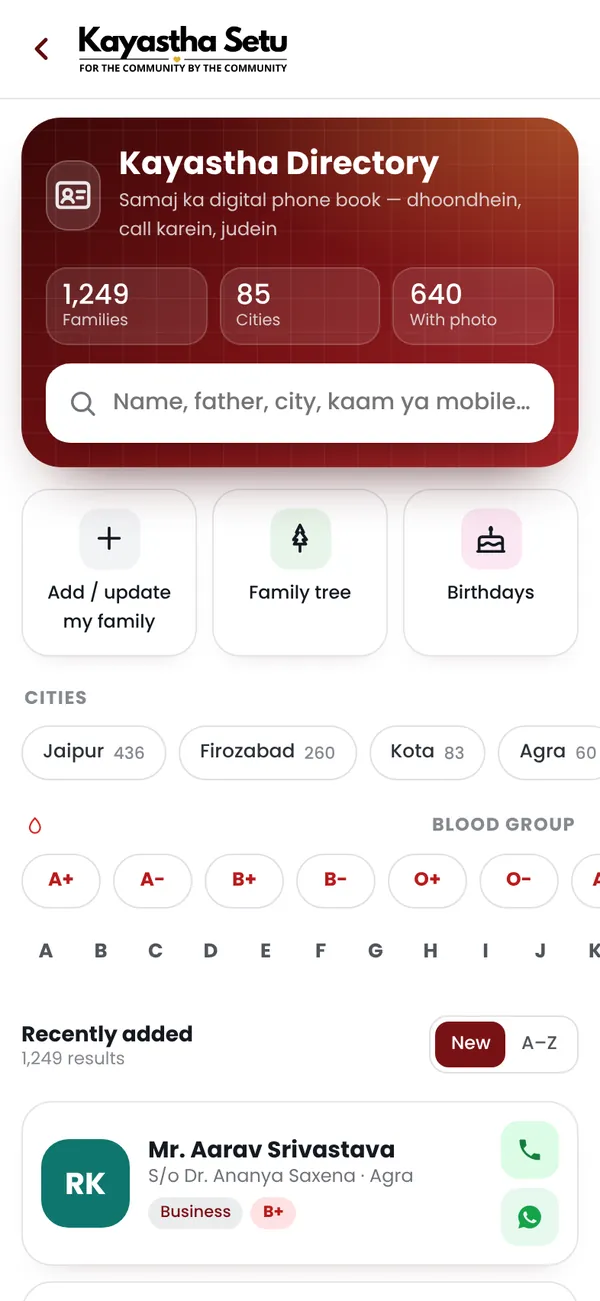
Platforms like Kayastha Setu's Family Directory help Ambastha Kayastha families connect with each other, share information and strengthen community bonds across geographical distances.
Preserving Ambastha Kayastha Heritage
As communities globalize and younger generations adopt new lifestyles, preserving Ambastha Kayastha heritage requires conscious effort:
- Family records: Documenting family histories, genealogies and ancestral connections to Bihar.
- Language: Teaching children Hindi, regional Bihari dialect and Sanskrit to maintain linguistic heritage.
- Rituals: Continuing traditional ceremonies and festivals, adapted for modern contexts.
- Community gatherings: Organizing samaj meetings, cultural programs and reunions to strengthen bonds.
- Mentorship: Sharing stories and wisdom from elders with younger generations.
The Ambastha Kayastha community remains proud of its Bihar heritage, its historical role in administration and education, and its commitment to Kayastha values of integrity, learning and service. By honouring these traditions while embracing modern opportunities, Ambastha Kayasthas continue to contribute meaningfully to both their communities and the wider society.
Find any Kayastha family by name, city or profession — your community address book.
ExploreFrequently asked questions
What is the connection between Ambastha Kayasthas and Bihar?
Ambastha Kayasthas have deep historical roots in Bihar, particularly in cities like Patna, Muzaffarpur and the Mithila region. Bihar has been the traditional homeland and cultural centre of Ambastha Kayastha identity for centuries, where they served in administrative, educational and mercantile roles.
What are the main customs of Ambastha Kayastha families?
Ambastha Kayasthas follow Hindu rituals with regional Bihari traditions, including reverence for Chitragupta, observe annual Chitragupta Puja, maintain extended family structures, follow specific marriage customs, and place strong emphasis on education and intellectual pursuits. They celebrate festivals like Diwali, Holi and Durga Puja with community participation.
How do Ambastha Kayasthas maintain their traditions today?
Modern Ambastha Kayasthas maintain traditions through family gatherings, celebrating festivals, teaching children about their heritage, participating in community organizations, and using platforms to connect with other community members. Many preserve family histories and genealogies while adapting traditions to contemporary lifestyles.
What historical roles did Ambastha Kayasthas traditionally hold?
Historically, Ambastha Kayasthas served as scribes, accountants, administrators, teachers and merchants in Bihar's kingdoms and later under British administration. This occupational heritage shaped their social status and their valued role in record-keeping and governance, consistent with broader Kayastha community traditions.
About Kayastha Setu: Kayastha Setu (kayasthasetu.com) is the community app of the Kayastha samaj — family directory, Kayastha matrimony, jobs, blood donors, SOS, daily panchang, live aarti and Kaya AI in Hindi and English. Read our guide to the Kayastha community or download the app.