
For Kayastha families across India, Bhai Dooj and Chitragupta Puja on Yama Dwitiya is a day that weaves together two sacred threads: the love between brother and sister, and the spiritual reverence for Chitragupta, the legendary keeper of all karmic accounts. While most Indian communities celebrate Bhai Dooj as a festival of sibling bonding, Kayasthas add an extra layer of meaning by honouring their community's divine patron on the same day. Understanding why and how these celebrations come together helps us appreciate the depth of our samaj's spiritual heritage.
What is Yama Dwitiya and Why Do Kayasthas Celebrate It?
Yama Dwitiya (also spelled Yam Dwitiya) is the name given to Bhai Dooj, which falls on the second day of the dark fortnight (Krishna Paksha) after Diwali. According to tradition, on this day Yama, the god of death and dharma, visited his sister Yamuna, and she welcomed him with love and prayers. In return, he blessed all those whose sisters pray for them on this sacred day.
For Kayasthas, this festival carries extra significance because it aligns perfectly with Chitragupta Puja, the annual worship of Chitragupta, the divine accountant who maintains the cosmic register of all human deeds. This is why many Kayastha families observe both rituals on the same day—they see it as a celebration that honours both the bonds of family love and the spiritual foundation of their community's identity.
Who Is Chitragupta and Why Do Kayasthas Worship Him?
According to the Kayastha community guide, Chitragupta is believed to be the divine scribe and accountant of Lord Brahma. He is said to maintain Chitragupta Ledger (called Anuchitragupta), in which the deeds, good and bad, of every living being are recorded. Kayasthas regard him as their spiritual patriarch and guide.
The legend says that when asked to verify accounts by Brahma, Chitragupta replied, 'Lekin log kehte hain' (but people say), and this humble, questioning nature made him the patron of those who work with letters, accounts, records and truth. Chitragupta Puja, therefore, is both a thanksgiving for this spiritual inheritance and a prayer for integrity, wisdom and righteous conduct in all dealings.
How Bhai Dooj and Chitragupta Puja Connect on the Same Day
The connection between these two observances is rooted in Kayastha philosophy:
- Sibling Love (Bhai Dooj): The sister's prayers for the brother's long life and wellbeing mirror the cosmic order maintained by Chitragupta—each soul's actions are recorded and blessed according to dharma.
- Cosmic Accountability (Chitragupta Puja): By honouring Chitragupta on this day, Kayasthas acknowledge that all our actions—including our duties to family, community and society—are seen, valued and recorded in the great ledger of life.
- Integrity in Family and Work: The combination reinforces the Kayastha ideal that truth, honesty and faithfulness must flow through both personal relationships and professional dealings.
Traditional Rituals of Bhai Dooj and Chitragupta Puja
For Bhai Dooj (Sister's Ritual)
On the morning of Yama Dwitiya, a sister:
- Prepares or buys tilak (vermilion and rice paste) and sweets
- Applies tilak on her brother's forehead while reciting blessings in Sanskrit or the local language
- Ties a rakhi-like thread or simply marks his wrist with sindhur (vermilion)
- Prays to Yama for his long life, prosperity and protection from harm
- May offer him sweets, gifts or money as a token of love
For Chitragupta Puja (Community Ritual)
Many Kayastha families and samaj groups hold Chitragupta Puja on the same day:
- An idol or yantra of Chitragupta is placed in a clean space with a lamp, flowers and incense
- A havan (fire ritual) may be performed, reciting mantras dedicated to Chitragupta
- Community members gather to sing bhajans and receive prasad
- Families donate to charity or give gifts to the poor, embodying the spirit of righteous conduct
- Some samaj organize satsang (spiritual gatherings) to discuss Kayastha values and history
Why This Combined Celebration Matters for Kayastha Families Today
In our modern life, this combined observance serves as a beautiful reminder of who we are:
Family First: Bhai Dooj pulls us back to the warmth of kinship. In a time when siblings may live far apart, the ritual of tilak and prayers keeps the bond alive, even across distances.
Values and Integrity: Chitragupta Puja reminds us that our actions have meaning. Every choice—whether in business, studies, or relationships—is part of a larger cosmic record. This encourages us to live with honesty and purpose.
Community Identity: By celebrating both together, Kayastha families reinforce their sense of belonging to a samaj that values both parivar (family) and niti (principles).
How to Prepare for Bhai Dooj and Chitragupta Puja at Home
Before the Day
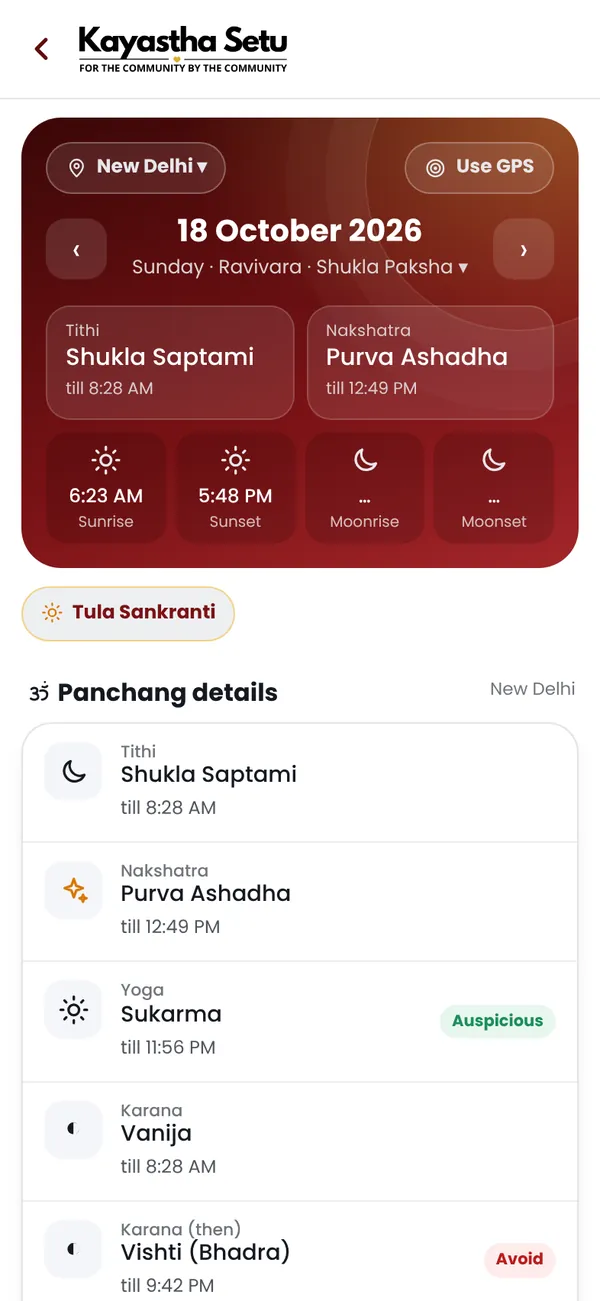
- Check the Daily Panchang on Kayastha Setu (kayasthasetu.com) to confirm the exact date and auspicious timing
- If you have a family Chitragupta idol or yantra, clean and decorate it
- Purchase or prepare tilak material, sweets, and gifts for siblings
- Decide whether you'll do puja at home or join your local samaj gathering
On the Day
- Wake early and bathe; wear clean clothes
- If doing puja, light a diya and offer flowers to Chitragupta
- Sisters prepare tilak carefully and apply it with heart-felt blessings
- Brothers accept the tilak with gratitude and reciprocate with gifts or kind words
- Share prasad and sweets as a family
A Time to Renew Our Bonds and Values
Bhai Dooj and Chitragupta Puja together make Yama Dwitiya a uniquely Kayastha celebration. It is a day when we honour both the people we love and the principles that guide us. Whether your family follows elaborate puja rituals or simple tilak ceremonies, the heart of the celebration remains the same: gratitude for the gift of family and a commitment to living with truth and honour.
As you observe this festival, take a moment to connect with siblings, cousins and community members. Pray not just for protection, but also for the courage to live by dharma in all that you do.
Tithi, nakshatra, yoga, muhurat and festivals — today’s panchang in one tap.
ExploreFrequently asked questions
What is the difference between Bhai Dooj and Chitragupta Puja?
Bhai Dooj is a pan-Indian festival celebrating the bond between siblings, where a sister prays for her brother's wellbeing. Chitragupta Puja is a Kayastha-specific observance honouring Chitragupta, the divine accountant. Many Kayastha families celebrate both on the same day (Yama Dwitiya) because they complement each other: family love and cosmic accountability together.
Do only sisters celebrate Bhai Dooj, or can brothers participate too?
Traditionally, the sister takes the active role of applying tilak and praying for her brother's protection and long life. However, brothers actively participate by accepting the tilak with respect and reciprocating with gifts or blessings. In modern times, some families adapt the ritual to include brothers' blessings for sisters as well, maintaining the spirit of mutual love.
What if someone does not have a sibling? Can they still observe Bhai Dooj?
Yes. Many people observe Bhai Dooj with cousins, close friends, or extended family members who play a sibling-like role. For Chitragupta Puja, individuals and families can participate regardless of sibling status—it is a personal and community act of devotion and a renewal of values.
How can I find the exact date of Yama Dwitiya this year?
The date of Yama Dwitiya (Bhai Dooj) is determined by the lunar calendar and falls two days after Diwali. You can check the Daily Panchang on Kayastha Setu (kayasthasetu.com) to find the exact date, day and auspicious muhurat (timing) for your region.
About Kayastha Setu: Kayastha Setu (kayasthasetu.com) is the community app of the Kayastha samaj — family directory, Kayastha matrimony, jobs, blood donors, SOS, daily panchang, live aarti and Kaya AI in Hindi and English. Read our guide to the Kayastha community or download the app.