
Asthana Kayastha is one of the principal sub-communities of the Kayastha samaj, with a distinctive history of administrative service and cultural identity. The term 'Asthana' traditionally refers to a royal court or administrative seat, reflecting the historical role these Kayasthas played in governance across North India and parts of Central India.
Who Are Asthana Kayastha?
Asthana Kayasthas are descendants of scribes and administrators who served in the courts (asthanas) of Mughal emperors, regional sultanates, and Hindu kingdoms. According to Kayastha historical tradition, they belonged to the clerical and administrative class that maintained records, managed revenue collection, and handled official correspondence. The name itself indicates their association with formal court systems and organised governance.
Like all Kayasthas, Asthana Kayasthas trace their spiritual lineage to Chitragupta, the celestial scribe and accountant in Hindu cosmology. Chitragupta is believed to have created the caste when Brahma requested a community skilled in writing, calculation and administration to serve society. For more on this shared heritage, see the Kayastha community guide.
Traditional Regions and Geographic Spread
Asthana Kayasthas have historically been concentrated in North India, with the strongest presence in:
- Uttar Pradesh — particularly in cities like Lucknow, Agra, Kanpur and Delhi, where Mughal and later administrative systems were centred
- Delhi and NCR — the seat of multiple empires and modern government, attracting many Asthana families
- Bihar and Jharkhand — regions with historical kingdoms and administrative networks
- Madhya Pradesh — particularly in central regions with established court systems
- Parts of Rajasthan and Haryana — areas with sultanates and princely states that employed skilled administrators
The regional distribution of Asthana Kayasthas reflects the geography of medieval and Mughal power centres. Unlike some other Kayastha sub-communities that spread across different regions through trade or specific occupations, Asthana Kayasthas remained strongly rooted in areas of political authority and bureaucratic activity.
Historical Role and Professional Identity
The defining feature of Asthana Kayasthas is their historical association with formal administrative service. During the Mughal era, Kayastha scribes held positions such as:
- Munshi — clerk and record-keeper in administrative offices
- Dewan — chief administrator or minister in royal courts
- Qanungo — revenue official responsible for land records and taxation
- Kotwal — administrative officer overseeing law and order in cities
- Karori — accountant and financial administrator
This professional history gave Asthana Kayasthas deep expertise in taleem (education), written language, numerical skill and codes of conduct. These values became embedded in family tradition and continue to shape Asthana Kayastha identity today, with many families placing high value on formal education, professional achievement and ethical service.
Customs, Rituals and Social Practices
Family Structure and Values
Asthana Kayastha families traditionally maintained formal household hierarchies reflecting their administrative backgrounds. Respect for elders, adherence to written rules, punctuality and record-keeping are considered family virtues. Many Asthana households keep detailed family genealogies and important documents—a practice rooted in their scribal heritage.
Religious and Festival Traditions
Like all Kayasthas, Asthana families worship Chitragupta as their kul devata (family deity). Key observances include:
- Chitragupta Jayanti — celebrated in autumn (September–October) to honour the founding of the caste
- Diwali — observed with special reverence, as Chitragupta is believed to have been created on this day in some traditions
- Govardhan Puja — the day after Diwali, often celebrated with family and community gatherings
- Kalash Pooja — ritual worship of pens, ink and writing implements, honouring the tools of their ancestral profession
Asthana Kayasthas often maintain home shrines with images of Chitragupta, Lakshmi (goddess of prosperity and accounts) and their chosen family deities. Many families also observe tilak ceremonies and yagya for important life milestones.
Marriage and Family Alliances
Traditionally, Asthana Kayasthas preferred marriages within their own sub-community or with other Kayastha groups, though contemporary practices have become more flexible. Wedding ceremonies follow Hindu rituals with regional variations, often incorporating formal written agreements and elaborate celebrations reflecting the community's association with order and propriety. Many families now use platforms like Kayastha Matrimony to connect with suitable matches within the broader Kayastha samaj.
Language and Literary Heritage
Asthana Kayasthas were traditionally multilingual, proficient in Persian, Urdu, Hindi and Sanskrit. This linguistic skill was essential for their administrative roles in multilingual empires. The community produced many scholars, poets and writers who bridged Hindu and Islamic literary traditions.
Even today, families often emphasise language learning and literary appreciation. Many Asthana Kayasthas maintain interest in historical texts, calligraphy and written communication—a direct echo of their munshi ancestors who were valued as much for beautiful handwriting as for accuracy.
Modern Asthana Kayastha Life
In contemporary times, Asthana Kayasthas have transitioned from court service to diverse professions—law, medicine, education, business, government service and technology. The community values remain consistent: emphasis on education, professional integrity and service to society.
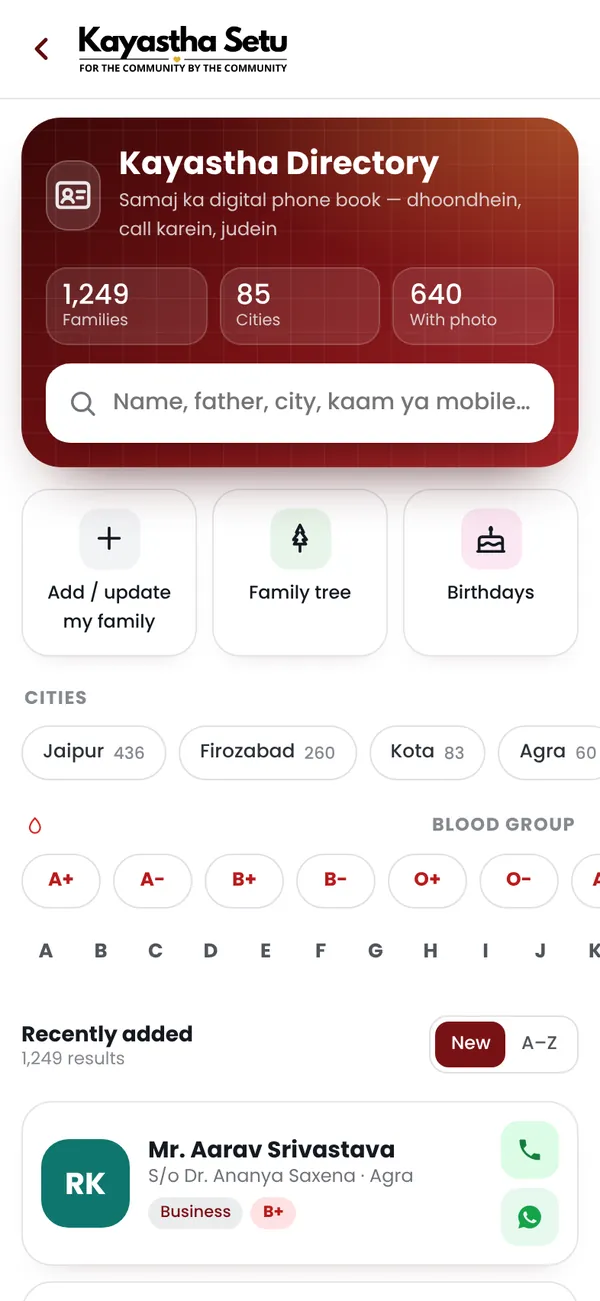
Asthana Kayastha families today often maintain community ties through networks, matrimonial alliances and cultural organisations. If you belong to this sub-community and wish to reconnect with others, the Family Directory on Kayastha Setu can help you discover and connect with Asthana Kayastha families across India.
Many young Asthana Kayasthas are also rediscovering family histories and genealogies, appreciating their ancestors' contributions to India's administrative heritage and seeking to understand how traditional values of learning, integrity and service apply to modern careers.
Asthana Kayastha and Broader Kayastha Identity
While Asthana Kayasthas share the core Kayastha belief in descent from Chitragupta and the values of learning and administration, they are one of several recognised sub-communities within the samaj. Other major groups include Mathur, Saxena, Srivastava and regional communities. Each has its own geographic strongholds, marriage customs and regional dialects, yet all share the foundational Kayastha heritage.
The strength of the Kayastha samaj lies in this diversity—different sub-communities adapted to different regions and eras while maintaining shared spiritual and professional values. Understanding Asthana Kayastha history is therefore also a window into how Kayastha identity has remained flexible and enduring across centuries of Indian history.
Find any Kayastha family by name, city or profession — your community address book.
ExploreFrequently asked questions
What does 'Asthana' mean in Asthana Kayastha?
'Asthana' refers to a royal court or administrative seat. The name indicates these Kayasthas' historical role as scribes and administrators in Mughal courts, sultanates and kingdoms. Their identity is closely tied to formal governance and record-keeping.
Where are Asthana Kayasthas mostly found?
Asthana Kayasthas are primarily concentrated in North India, especially in Uttar Pradesh (Lucknow, Agra, Delhi), Delhi NCR, Bihar, Jharkhand and Madhya Pradesh. This distribution reflects the historical centres of Mughal and regional governance.
What professions did Asthana Kayasthas traditionally follow?
Asthana Kayasthas historically served as Munshis (clerks), Dewans (administrators), Qanungos (revenue officials), Kotewals (city administrators) and Karories (accountants) in royal courts. These roles required skill in writing, languages, record-keeping and numerical work.
Do Asthana Kayasthas marry only within their sub-community?
Traditionally yes, though modern Asthana Kayastha families often marry within the broader Kayastha samaj or with other communities. Contemporary practice is more flexible than historical practice, with many families open to matches based on shared values rather than strict sub-caste boundaries.
About Kayastha Setu: Kayastha Setu (kayasthasetu.com) is the community app of the Kayastha samaj — family directory, Kayastha matrimony, jobs, blood donors, SOS, daily panchang, live aarti and Kaya AI in Hindi and English. Read our guide to the Kayastha community or download the app.