
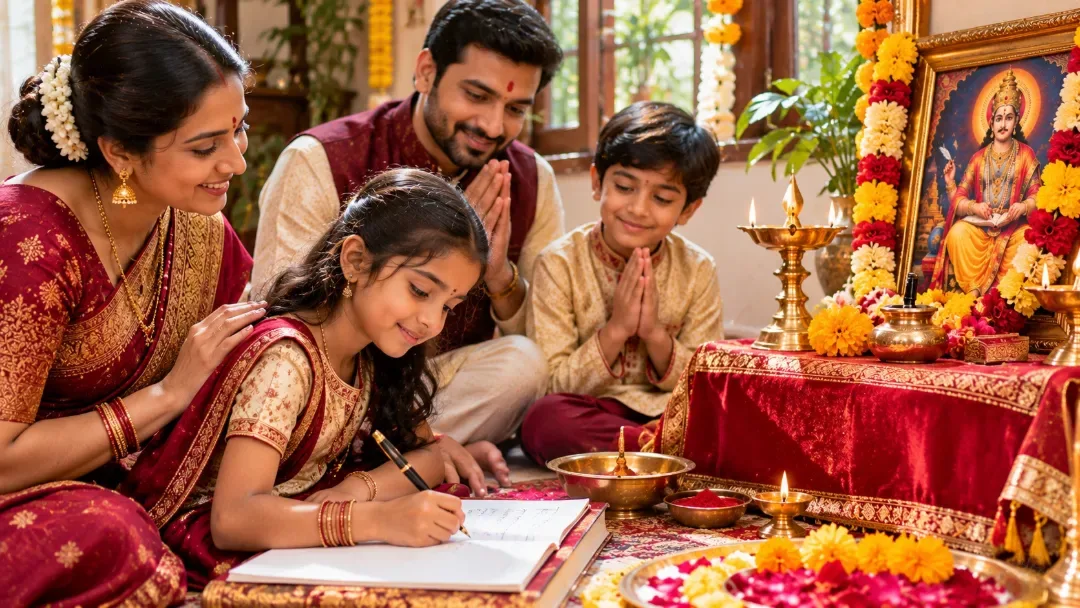
For a Kayastha family, the pen is not just a tool. It is the symbol of Bhagwan Shri Chitragupta, the divine keeper of records, and the source of the community’s pride in learning. Once a year, on Kartik Shukla Dwitiya, families place their pens, inkpots, books and account registers before the Lord and worship them. This is Kalam-Dawat Puja, also called Chitragupta Puja.
What “Kalam-Dawat” means
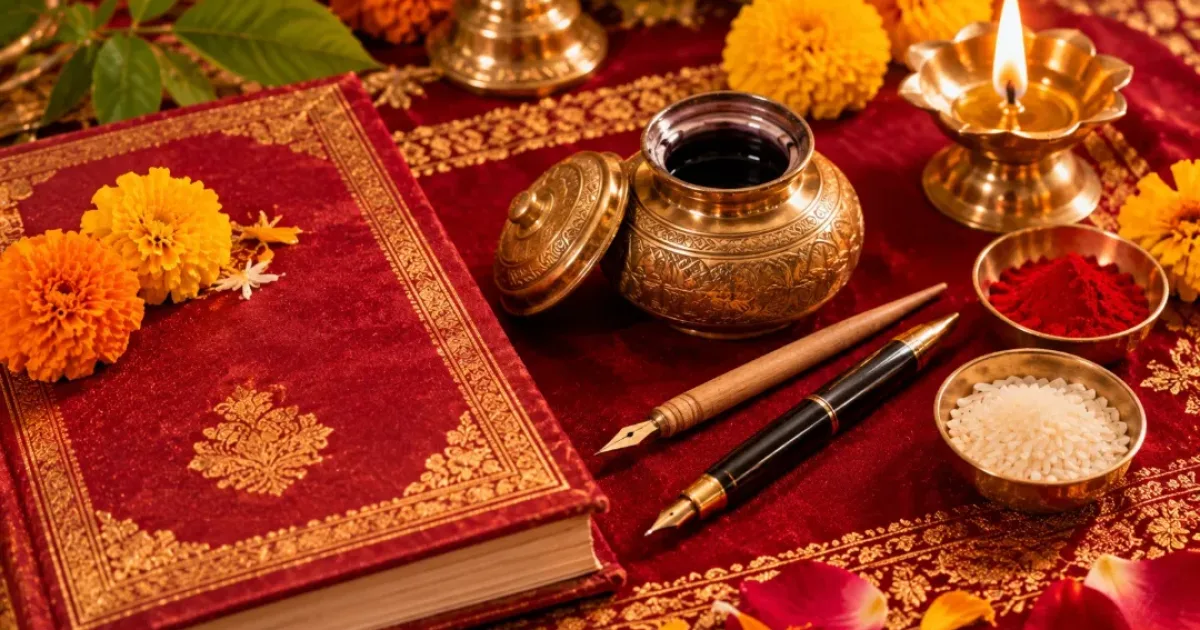
Kalam is the pen and dawat is the inkpot. Lord Chitragupta is always shown with these two in his hands, along with a register (bahi or patti) and a sword. He writes down every good and bad deed of every living being, and on that basis Dharmaraja Yama gives justice. Worshipping the pen on this day is a way of honouring knowledge, honesty and the written word — and of asking for wisdom in the year ahead.
Why the pen rests after Diwali
In many Kayastha homes the pen is rested from Diwali until this puja — no writing and no accounts. On the puja day the pen is worshipped first, a fresh account is written and offered to the Lord, and only then is the pen picked up again. Students often keep their books and stationery for the puja so the new term begins with blessings. Some families follow this strictly; others keep only a symbolic pause. Both are part of the same tradition.
When it is celebrated
Kalam-Dawat Puja falls on Kartik Shukla Dwitiya, known as Yama Dwitiya — the same day as Bhai Dooj, two days after Diwali. Because tithis change with the moon, the exact date and the best time differ every year. Check the date and muhurat for your own city in the daily panchang before you plan the puja.
Samagri (things you need)
- A picture or murti of Lord Chitragupta, and a red or yellow cloth for the chowki
- Kalash with water, mango leaves and a coconut
- Diya, ghee or oil, cotton wicks, agarbatti and dhoop
- Roli, chandan, haldi, akshat (unbroken rice) and a little kumkum
- Fresh flowers and a garland
- Paan, supari, cloves, elaichi
- Fruits, sweets and panchamrit (milk, curd, ghee, honey, sugar)
- Gangajal
- A new pen, an inkpot or ink, fresh white paper, books and the family’s account registers
- A few coins or notes as dakshina
Simple vidhi at home
- Prepare. Bathe, wear clean clothes and clean the puja place. Spread the cloth on the chowki and place Lord Chitragupta’s picture on it.
- Kalash and diya. Set up the kalash, light the diya and agarbatti, and sprinkle Gangajal around the puja place.
- Ganesh vandana. Begin, as in every puja, by remembering Shri Ganesh.
- Worship the Lord. Offer roli, chandan, akshat, flowers and the garland to Lord Chitragupta while chanting ॐ श्री चित्रगुप्ताय नमः.
- Worship the pen and books. Place the new pen, inkpot, paper, books and registers in front of the Lord. Apply tilak and akshat to them and offer a flower.
- Write the offering. On the fresh paper write the lines given below with the new pen, fold it and offer it at the Lord’s feet.
- Katha and aarti. Read or listen to the Chitragupta katha, then do the aarti with the whole family.
- Prasad. Offer the sweets and fruits, then share the prasad. Pick up your pen again only after the puja.
What to write on the puja paper
Families write slightly different things, but the most common pattern is:
- “ॐ श्री चित्रगुप्ताय नमः” at the top — many also write “Shri Chitragupta Ji Sahay”
- Your full name, your father’s name and your address
- A short account of the year’s income and expenses, or simply “all earnings by honest means”
- A short prayer for knowledge, good health and right conduct in the coming year
Children can write their name, class and a line about what they want to learn this year. It is a beautiful way to teach them honesty and gratitude.
The katha of King Saudas
The most popular katha read on this day is of King Saudas of Saurashtra, who had committed many sins. One Yama Dwitiya he saw people worshipping Lord Chitragupta and joined the puja with a sincere heart. When his account was read in Yamaloka, the merit of that one puja was so great that his sins were forgiven. The message: sincere devotion and honest accounts can change one’s fate.
Celebrate together
Many Kayastha sabhas hold a community puja with cultural programmes on this day. On Kayastha Setu you can see the date and muhurat in the panchang, get a reminder, and send Chitragupta Puja wishes to relatives with Shubh Sandesh cards. To read the full story of Lord Chitragupta and his family, see our Kayastha community guide.
Frequently asked questions
When is Kalam-Dawat Puja celebrated?
On Kartik Shukla Dwitiya (Yama Dwitiya), the day of Bhai Dooj, two days after Diwali. Check the panchang for your city’s exact date and muhurat.
Why do Kayasthas not use the pen after Diwali?
The pen is Lord Chitragupta’s symbol. Many families rest it from Diwali and worship it on Kartik Shukla Dwitiya, so the new year’s writing begins with his blessing.
What is written on the paper in Chitragupta Puja?
Usually “ॐ श्री चित्रगुप्ताय नमः” or “Shri Chitragupta Ji Sahay”, your name and address, a short account of the year’s income and expenses, and a prayer.
What is the mantra of Lord Chitragupta?
ॐ श्री चित्रगुप्ताय नमः (Om Shri Chitraguptaya Namah).
About Kayastha Setu: Kayastha Setu (kayasthasetu.com) is the community app of the Kayastha samaj — family directory, Kayastha matrimony, jobs, blood donors, SOS, daily panchang, live aarti and Kaya AI in Hindi and English. Read our guide to the Kayastha community or download the app.