
In most Kayastha homes there is one elder who remembers everything. Which great-grandfather served in the court, which nani made the best kebab, which song is sung at a mundan, and why the whole family sits down for Kalam-Dawat puja after Diwali. These memories are precious, but they live in people, not in books. If nobody writes them down, they can be lost in a single generation.
Kayastha Setu gives every family a simple way to keep this history safe and to pass on gyan to the children. Here are some practical best practices, written so that anyone in the family, young or old, can follow them.
Start with the Family Tree, one generation at a time
The Family Tree lets you build your vansh vriksh right inside the app. It is free for every member. Open Family Tree from the Directory and begin with the people you know best: your parents, your spouse and your children.
Do not try to finish the whole tree in one evening. A good habit is to add one generation at a time:
- First: yourself, your spouse, your children and your parents.
- Next: grandparents on both sides, uncles, aunts and cousins.
- Then: great-grandparents and older names that elders remember.
For every person you can add a photo, birth year, city and occupation. Even a small detail, like the town a great-grandfather came from, becomes a treasure for the next generation.
Sit with the elders while you add names
The best source of family history is sitting in your own home. Show the tree on your phone to Dadi, Nana or a senior uncle and ask them to fill the gaps. The tree is clean and zoomable, so elders can see the generations at a glance. Many families find that this turns into a lovely conversation full of old stories.
Link relatives who are already on Kayastha Setu
If a relative already uses the app, you do not need to type their details again. Search for them and link them. Their tree joins yours, and your family picture grows quickly. From the Family Directory, you can also jump from a profile to the family tree and see how you are related.
Build it together with cousins
No single person knows every branch. Share the tree with cousins and let them add the branches they know best. One cousin may know the maternal side, another may have old photos of the paternal side. When everyone adds a little, the tree becomes complete.
Keep your family history private and respectful
Family history is personal. That is why the Family Tree is private by design. Your tree is visible only inside the app, never on the open web. Still, a few simple habits help:
- Add only details that the family is comfortable sharing.
- Use clear, respectful photos of elders and departed members.
- Ask before adding a relative's photo or details if you are not sure.
Let the tree help you remember birthdays
Once dates are in the tree, it starts helping you in daily life. Birthdays from the tree can remind you to wish on time. With Birthdays, Wishes & Gifts, you get a gentle morning reminder and can send a wish in one tap. A small wish to a distant cousin keeps the family close.
Learn your roots with Kayastha Gyan
Knowing names is one part of history. Knowing who we are as a samaj is the other part. Kayastha Gyan explains, in simple chapters, the story of Bhagwan Shri Chitragupta ji and his family, the 12 Kayastha vansh, and how and why we celebrate Kalam-Dawat puja.
Some ways to use it well:
- Read one chapter a week with children. The chapters are short and easy for every age, in Hindi or English.
- Read before Chitragupta puja. Kayastha Gyan shows a countdown to the next puja date, a good reminder to read the story again as a family.
- Share chapters with relatives. Send a chapter to children and cousins who live far away, so they also grow up knowing their roots.
A child who knows the story of Chitragupta ji and the names of four generations of the family grows up with a quiet pride that no school can teach.
Write down recipes, rituals and lok geet
Family history is not only names and dates. It is also the way your family makes Holi gujiya, the rituals at a wedding, and the songs sung at a birth. Recipes & Parampara is where members write these down.
- Recipes: share your family's recipe with ingredients and steps.
- Riti-riwaj: explain wedding, festival and family rituals the way your family does them.
- Kahaniyan: write down the stories elders tell.
- Lok geet: save the songs for weddings, births and festivals.
A simple tip: record an elder singing or telling a story, then sit with a younger family member and write it out together in the app. Two generations work side by side, and the tradition is saved for good.
A simple monthly routine
| When | What to do |
|---|---|
| Once a month | Add or update a branch in the Family Tree with an elder's help |
| Every week | Read one Kayastha Gyan chapter with the children |
| On festivals | Write one recipe or ritual in Recipes & Parampara |
| Every birthday | Wish the person on time with one tap |
The whole app works in Hindi, English, Marathi and Bengali, so every member of the family can use it in the language they are most comfortable with.
Begin today
You do not need to be an expert or a historian. Start with five names, one photo and one story from an elder. Come back next week and add a little more. Over time, your family will have a living record of its roots, ready to pass on with love to the next generation. Happy tree building from all of us at the Kayastha Setu Team!
Build your vansh vriksh — parents, grandparents, children and in-laws, with photos.
Explore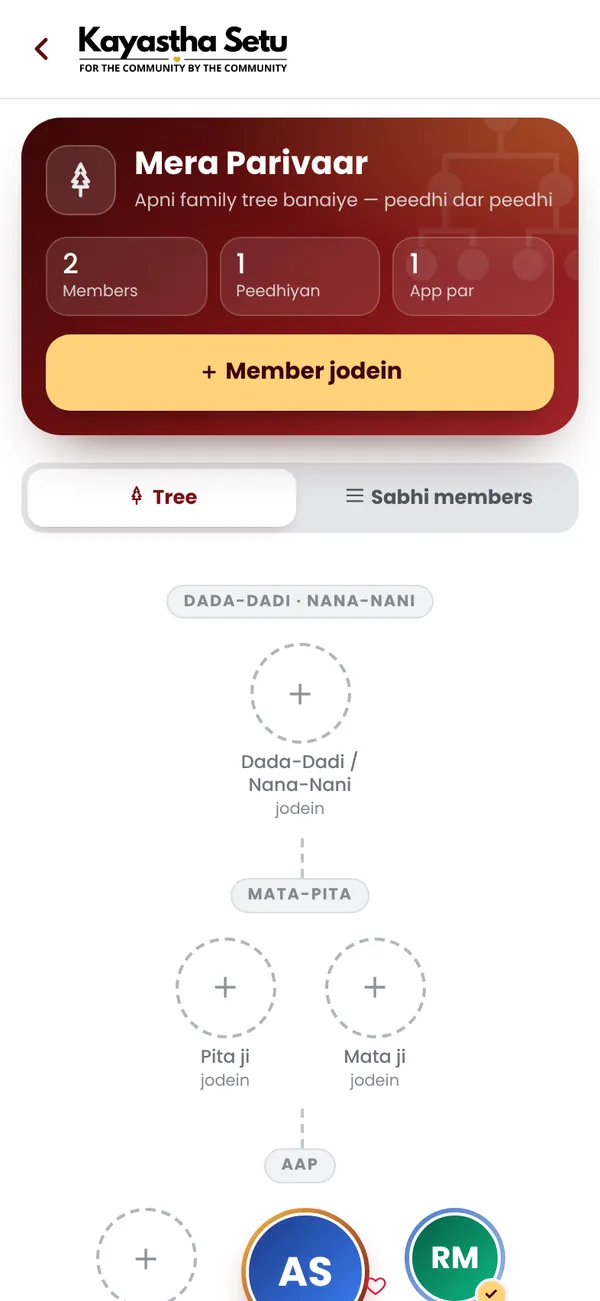
Frequently asked questions
Is the Family Tree free on Kayastha Setu?
Yes. The Family Tree is free for every member of the Kayastha Setu app.
Who can see my family tree?
Your tree is visible only inside the app, never on the open web.
What can children learn in Kayastha Gyan?
The story of Bhagwan Shri Chitragupta ji and his family, the 12 Kayastha vansh and why we celebrate Kalam-Dawat puja, in simple chapters.